Sustainable Hiking in New Zealand
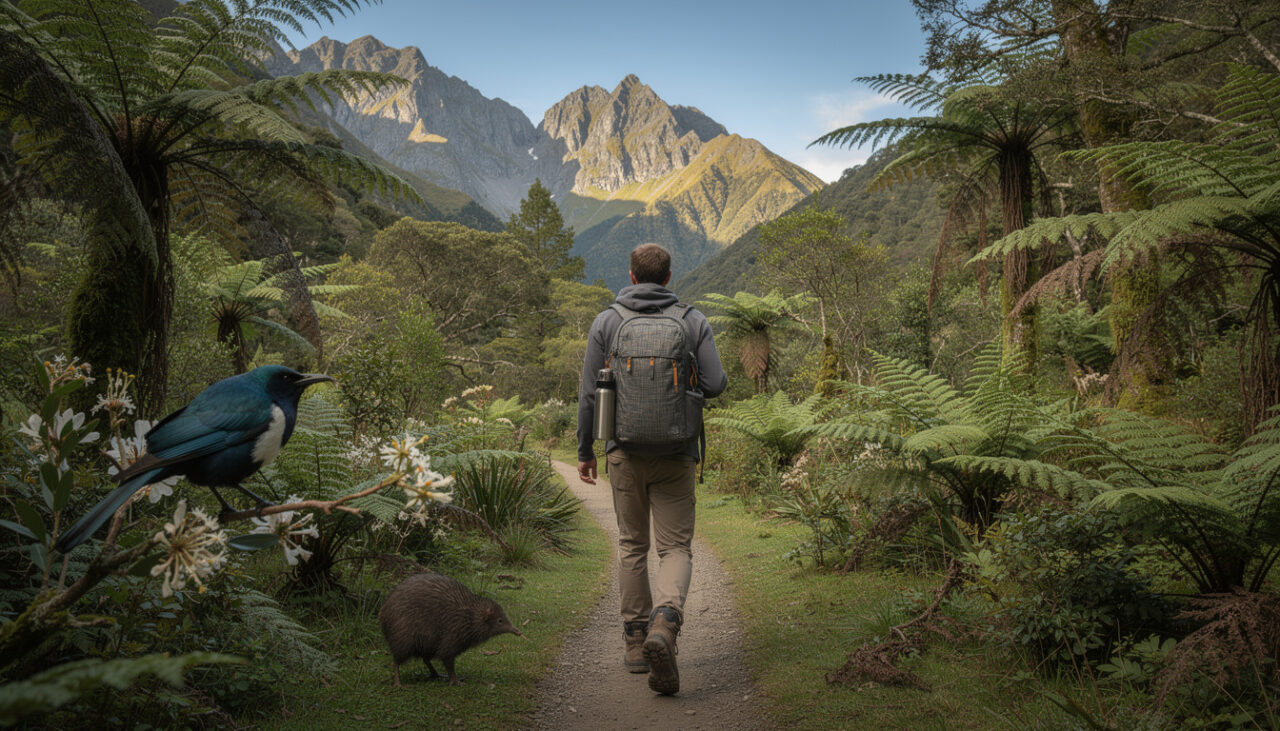
New Zealand rewards hikers with a mix of world-class scenery and deeply rooted cultural stories, from the snow-crusted ridges of Aoraki/Mount Cook to the golden bays of Abel Tasman and the mossy beech forests of Fiordland. Sustainable hiking in this landscape sits at the crossroads of adventure and responsibility: epic multi-day Great Walks, airy day hikes, and secret eco-friendly trails are all woven into a conservation success story built over decades. Hikers step into a living laboratory of native flora and rare birds, where every boot print either supports or harms trail preservation, wildlife protection, and the legacy of kaitiakitanga, the Māori concept of guardianship. Those who choose low-impact techniques, renewable resources in their gear, and minimal impact camping discover something powerful: the lighter the footprint, the richer the experience. Sustainable hiking here feels less like compromise and more like unlocking the real New Zealand.
Key points about sustainable hiking in New Zealand
- 🌿 Sustainable hiking in New Zealand blends adventure with care, focusing on leave no trace ethics, Māori values of guardianship, and robust conservation projects on both islands.
- 🥾 The country’s Great Walks and lesser-known eco-friendly trails give hikers every level of challenge, from beachside strolls to serious alpine traverses, all designed to keep trail preservation front and centre.
- 🦜 Hikers move through habitats packed with endemic species; smart choices around wildlife protection, waste, and camping practices protect delicate ecosystems and ancient forests.
- 🔥 Minimal impact camping, renewable resources in gear, and careful transport planning shrink your carbon footprint while still delivering those life-changing ridge-top sunrises.
- 🤝 Local guides, DOC rangers, and volunteer groups turn sustainable hiking into a community effort, with track maintenance days, pest-control projects, and opportunities to give back.
- 🧭 The sections ahead unpack ethics, specific trails, practical low-impact techniques, and planning tips so every trek becomes a genuine partnership with the land of Aotearoa.
Sustainable Hiking in New Zealand: Ethics, Culture, and the Spirit of Kaitiakitanga
Sustainable hiking in New Zealand starts long before lacing up boots. It begins with a mindset that treats each valley, alpine pass, and beach as a living relative, not a playground. That attitude echoes Māori concepts of kaitiakitanga (guardianship) and manaakitanga (care and hospitality), now deeply woven into visitor guidelines from the Department of Conservation (DOC). When hikers embrace those values, eco-friendly trails stop being a trend and become part of a wider cultural story. 🌏
A recurring character on these tracks is the traveler who arrives thinking this is “just another hike” and leaves stunned by the intimacy of the experience. Call this person Alex. On day one, Alex snaps photos of kea and poses at swing bridges. By day four, on a misty Fiordland ridgeline, every rustle in the beech forest feels personal. The idea of dropping an orange peel or stepping off the track into fragile moss suddenly feels unthinkable. That emotional shift is the real engine of sustainable hiking here.
The leave no trace framework translates those emotions into action. On New Zealand tracks, the seven principles get sharpened by local realities: heavy rainfall that turns shortcuts into erosion scars, ground-nesting birds that panic at loose dogs, alpine plants that need decades to recover from a single careless footstep. The country’s network of over 13,000 km of tracks is robust yet surprisingly vulnerable. Trails like the Milford, Routeburn, and Tongariro Northern Circuit are carefully engineered, but one season of careless use can undo years of conservation work.
Ethics here also mean listening to stories of place. On the Tongariro Alpine Crossing, the volcanic peaks are not just Instagram backdrops; Tongariro, Ngāuruhoe, and Ruapehu carry deep spiritual weight as ancestors for local iwi. Respecting cultural rāhui (temporary closures) or track diversions is part of sustainable hiking, just as much as packing out rubbish. When DOC signage asks visitors to avoid certain areas, those requests often sit on a foundation of both ecological science and cultural agreements.
There’s another layer: New Zealand sits on the sharp edge of global tourism debates. Other mountain destinations, from the Alps to the Rockies, wrestle with similar issues. Some travellers split their year between eco-friendly cabins in the Alps—like those highlighted on sustainable alpine stays—and Great Walks in Aotearoa. The comparison often surprises them. In the Alps, centuries of settlement created a cultural landscape; in New Zealand, vast portions of trail pass through land that still feels raw and primordial. That difference demands a gentler gait.
Instead of treating guidelines as restrictions, many hikers learn to read them as a form of respect. Stick to the formed path? That’s not bureaucracy; it’s a promise to future hikers that the forest around the trail will still be intact. Use minimal impact camping techniques and avoid soaps near waterways? That’s a pledge to the next generation of eels, kōura (freshwater crayfish), and mayflies. Turn back when weather turns wild? That’s acknowledging that mountains run on their own time.
New Zealand’s approach also pushes hikers to think about the entire journey, from flights and rental cars to food choices. Carpooling to trailheads, opting for buses where possible, and choosing local operators with clear conservation commitments all help reduce impact. People who might once have booked only city breaks or eco-conscious cruises in the Caribbean are now treating a tramp in Aotearoa as a “flagship” sustainable trip, setting new standards for how they travel everywhere.
What emerges is simple: ethics here are not an optional upgrade. They are the thread that holds the entire hiking experience together, turning a walk through pretty scenery into a relationship with land, history, and community.
Eco-Friendly Trails and Great Walks: Where Sustainability Meets Scenery
Across both islands, New Zealand’s trail network reads like a curated album of the planet’s best landscapes. Yet the routes that feel most magical also tend to be those cared for with almost obsessive attention to sustainability. The famous Great Walks—Milford, Kepler, Routeburn, Tongariro Northern Circuit, Abel Tasman, and more—are managed as showcases of sustainable hiking, pairing world-class views with strict controls on numbers, infrastructure, and track design. ✨
Take the Abel Tasman Coastal Track. On paper it’s a moderate coastal route between marbled bays and native bush. In practice, it’s a living classroom. Tidal crossings at Awaroa, carefully placed boardwalks, and designated campsites funnel thousands of hikers onto hardened surfaces, preserving dunes, shell banks, and regenerating coastal forest. Many visitors split their time between tramping and sea kayaking, watching stingrays glide through shallows while learning how marine reserves protect fragile nurseries for fish and seabirds.
Further south, the Kepler Track offers a different lesson. It was purpose-built to handle pressure on older routes in Fiordland, climbing through moss-draped red beech into an alpine world of tussock and ridgelines. Long staircases, well-drained switchbacks, and strategically placed huts keep people away from erosion-prone slopes. When Alex pushes up toward Luxmore Hut, the path underfoot is a quiet engineering triumph: water bars, armored corners, and carefully graded zigzags reduce runoff that could otherwise carve gullies through the hillside.
On the North Island, the Tongariro Northern Circuit embraces a more volcanic vibe. Steam vents exhale near the track, emerald lakes glow unreal against charred rock, and scree slopes invite shortcuts—exactly where sustainable design matters most. Marker poles guide hikers away from unstable ground, while seasonal restrictions and weather alerts keep people off the track during dangerous conditions. Here, eco-friendly trails are about channeling curiosity without letting it spill over into fragile thermal areas and culturally sacred sites.
Some of New Zealand’s most sustainable experiences, though, happen away from headline trails. Stewart Island’s North West Circuit tests resolve across days of mud, roots, and solitude. Huts rather than backcountry camping reduce the risk of sprawling informal sites. On stormy nights, trampers swap stories by candlelight about kiwi calls outside and the satisfaction of moving through a place that still feels almost prehistoric. Hardship becomes part of the reward, filtering visitor numbers naturally while keeping human impact concentrated and manageable.
To distil how different routes support trail preservation and minimal impact camping, a quick overview helps:
| Trail 🌍 | Sustainability features 🌱 | Ideal hiker profile 🥾 |
|---|---|---|
| Milford Track | Strict quotas, raised boardwalks, DOC-led education talks, strong wildlife protection focus 🦜 | Fit hikers seeking a guided Great Walk experience with structured huts |
| Abel Tasman Coastal | Tidal planning, hardened campsites, kayak–hike combos reducing road traffic 🚤 | Beach lovers and families wanting gentle terrain and flexible stages |
| Kepler Track | Purpose-built loop, robust drainage, clear zoning for minimal impact camping ⛺ | Adventurous trekkers comfortable with alpine weather swings |
| Tongariro Northern Circuit | Culturally sensitive zoning, scree management, seasonal safety controls 🌋 | Volcano enthusiasts ready for exposed terrain and strong winds |
| North West Circuit | Remote huts, limited infrastructure, natural filtering of visitor numbers 🌧️ | Experienced trampers craving isolation and challenging conditions |
These examples show how thoughtful design, quotas, and clear rules transform trails into long-term assets rather than short-lived attractions. The same principles echo in shorter day walks such as Hooker Valley, Rob Roy Glacier, or the Tongariro Alpine Crossing, where hardened paths, viewing platforms, and seasonal shuttles reduce congestion and damage.
What sets New Zealand apart is the feeling that hikers are invited into a shared project. When Alex signs the hut book on the Kepler or chats to a ranger on the Routeburn, there’s a sense of joining an ongoing effort kept alive by DOC crew, scientists, local iwi, and thousands of trampers who care enough to follow the rules. Those trails become not just routes on a map, but living examples of how tourism and conservation can genuinely support each other.
Low-Impact Techniques and Minimal Impact Camping on Aotearoa’s Tracks
Gear lists and fitness get plenty of attention, yet on sustainable hiking trips the real difference comes from technique. Small choices accumulate into a huge ecological footprint—or a featherlight one. For hikers on New Zealand tracks, developing a few deliberate habits turns every camp and lunch stop into an act of care rather than consumption. 🏕️
The classic mantra, “take only pictures, leave only footprints,” barely scratches the surface. On popular lakeside camps in Nelson Lakes or riverside sites near the Hollyford, someone like Alex thinks about exactly how tent placement, cooking, and washing ripple through the ecosystem. Choosing compact, renewable resources-based fuel like modern gas canisters or biofuel stoves means no scavenging for firewood. Fires, where still allowed, get kept tiny and confined to existing rings, with cold ash scattered discreetly the next morning.
Water use is another quiet frontier. Alpine streams may look pristine, but concentrated soap—even “biodegradable” types—can overload small waterways. Hikers fill pots far from camp, carry water 60–70 metres away, and do all their cleaning in a small basin, scattering grey water widely across soil rather than tipping it straight back into a stream. The routine feels almost ritualistic, grounding each evening in a pattern of respect.
To keep the basics straight, many hikers run through a quick field checklist like this before leaving camp:
- ♻️ Rubbish sweep: Scan for micro-trash—tea bag tags, noodle wrappers, stray cord cuttings.
- 💧 Water discipline: Check that no food scraps or detergents reached the stream edge.
- 🔥 Heat source: Confirm stoves are cool and fuel packed safely; no embers left smouldering.
- 🌱 Ground impact: Inspect for new fire scars, trampled plants, or damaged roots around the tent.
- 🦆 Wildlife awareness: Ensure no food or scraps are left where birds or possums can reach them.
Human waste demands equally careful thinking. On backcountry routes without toilets, digging proper catholes at the recommended depth and distance from water feels unglamorous but foundational. In heavily used fragile environments—certain alpine basins or canyon-like valleys—packing out waste with purpose-designed bags is fast becoming standard. Those choices protect both water quality and the sense of wildness for people arriving after.
Noise and light count as impacts too. In DOC huts, late-night conversations shrink to whispers, and headlamps get dimmed toward red modes so others can sleep and night-active creatures stay calm. Outside, turning away from screens and bright lanterns lets the Southern sky reclaim the scene. On cloudless nights near Aoraki, Milky Way arches above snowfields while the soundscape shrinks to distant avalanches and river rushes—a powerful reminder of why restraint matters.
Compared with high-adrenaline trips like adventure sports in South Africa or fast-paced road journeys in the US, these routines might look almost slow. Yet that slowness is deliberate. Sustainable hiking isn’t about racing from viewpoint to viewpoint; it’s about lingering long enough to notice the moss species, the ice patterns on a tarn, the way tī kōuka (cabbage trees) frame a valley. Low-impact technique creates the space for those details to surface.
As more hikers adopt these habits, camp stories change. Instead of bragging about miles crushed or fires built, people trade tips about ultralight trash bags, solar chargers, or the best way to rig a tarp so rainwater is directed away from compacted ground. Small adjustments, multiplied by thousands of boots, weave a safety net under the very trails that drew everyone here in the first place.
Native Flora, Wildlife Protection, and the Magic of New Zealand’s Biodiversity
New Zealand’s isolation turned the country into a biological experiment, a place where birds took on the roles usually played by mammals and forests evolved without hoofed grazers. Sustainable hiking here means walking through that experiment with care, aware that boot lugs, crumbs, and stray seeds can rewrite thousands of years of evolution. 🌺
On the forested slopes of the Routeburn or Lake Waikaremoana, hikers move through tapestries of native flora: towering rimu and kahikatea, the intricate filigree of tree ferns, and drapes of moss that swallow sound. Many of these plants are poorly adapted to trampling. Roots spread close to the surface in spongy soils; repeated off-track detours compress that cushion, changing drainage and exposing roots to rot. Staying on the benched path isn’t just about tidiness; it’s a lifeline for the forest structure.
Wildlife encounters draw even more emotion. On a still night outside a Fiordland hut, a kiwi might shuffle past, snuffling for insects. In the high country around Aoraki, kea wheel overhead, their calls like rusty door hinges. Sustainable hiking turns those brief contacts into a code of conduct. Feeding a kea so it comes closer for photos, dropping a scrap “for the birds,” or leaving a pack unattended at a lunch spot slowly trains animals into dependency. DOC signs about not feeding wildlife are the frontline of wildlife protection—but the real enforcement happens one ethical decision at a time.
Pest control adds a sobering backdrop. Many valleys echo with the clack of trap doors or bait station lids as volunteers check lines targeting stoats, rats, and possums. These introduced mammals decimated native bird populations across the twentieth century. Today, hikers share the tracks with community groups who tramp the same hills carrying bait, tools, and monitoring gear instead of cameras. Joining a work party or donation drive turns abstract conservation into something felt in the legs and lungs.
Birdsong becomes a barometer of success. On predator-controlled sections of the Heaphy or in sanctuaries like Zealandia near Wellington, dawn can sound almost tropical, alive with tūī, kererū, kākāriki, and tīeke. In quieter valleys, the thin chorus reminds hikers what is still at stake. When Alex pauses on the Queen Charlotte Track and hears the thump of a kererū’s wings overhead, that heavy beat carries decades of effort: trap lines, replanting, and access rules designed to keep dogs out of sensitive areas.
Waterways tell their own story. Glacial rivers race blue and icy through gravel beds, while tea-coloured forest creeks slide softly over roots. Sediment and pollution from careless behaviour or track erosion can cloud those flows, smothering spawning grounds and invertebrate habitat. This is why so much track design in New Zealand dances around water: well-placed bridges, sturdy stepping stones, and bank protection keep thousands of boots from churning up the margins.
Hikers who fall in love with this biodiversity often find themselves digging deeper at home. They read up on New Zealand’s ambitious predator-free goals, donate to local conservation trusts, or tweak garden plants and bird-feeding habits back in their own countries. The transformation is subtle but powerful. A hike that began as a bucket-list adventure becomes a turning point, a moment where personal recreation aligns with planetary care.
That alignment might not make for the loudest social media caption, yet on the track it’s what people remember. The echo of a kiwi call, the metallic flash of a tui’s feathers, or the slow sway of a silver fern in wind—all of these linger long after passports are stamped and packs unpacked. Protecting them is not just a duty; it’s a privilege that deepens every step.
Planning a Low-Carbon, High-Reward Hiking Journey Across New Zealand
Thoughtful planning turns a hiking trip in New Zealand into a blueprint for low-carbon travel everywhere. The obvious challenges—distance, weather, logistics—hide a quieter question: how can a journey to such a remote corner of the globe support conservation rather than strain it? The answer sits in dozens of choices about transport, timing, and what gets packed. 🧭
Many visitors link multiple destinations across a single long-haul flight, balancing their footprint with a slower style of travel. Someone who once hopped between short breaks and quick road trips in the USA may instead spend several weeks moving thoughtfully from North Island trails to South Island Great Walks. Buses, shared shuttles, and carpooling with other trampers on online forums all reduce per-person emissions, especially on remote routes where public transport is still patchy.
Timing also shapes how sustainable a trip feels. Busy summer weeks send hut bookings soaring and car parks overflowing, putting stress on infrastructure and staff. Shoulder seasons—late spring and early autumn—often offer stable weather, lighter crowds, and more relaxed hut atmospheres. On a misty March morning on the Routeburn, Alex might share a hut with a dozen hikers instead of fifty, making it easier for rangers to run informal talks about trail preservation and leave no trace practices.
Gear choices carry surprising weight. Opting for long-lasting equipment, renting or buying second-hand items in-country, and repairing rather than replacing all cut down on resource use. Many hikers gravitate toward brands investing in recycled fabrics and renewable materials, yet perhaps the most powerful move is resisting gear churn. A well-cared-for rain jacket lasting a decade beats any “green” replacement purchased every two years. On the track, duct-taped poles and scarred packs often tell the most sustainable stories.
Food planning brings another layer. Bulk dry goods, home-dehydrated meals, and refillable containers keep packaging waste out of hut bins and backcountry pits. Locally sourced snacks—New Zealand cheese, nuts, or dried fruit—trim long supply chains. Some hikers go a step further and coordinate with friends met online, pooling fuel and cookware the way travellers on group-oriented trips might share costs and stories on a social travel adventure. Shared resources mean fewer duplicate stoves, pots, and fuel canisters clogging hut porches.
On the safety and navigation front, sustainable planning includes humility. Weather systems move ruthlessly across the Tasman Sea; forecasts matter. Checking DOC alerts, avalanche advisories, and local mountain radio reports becomes part of the routine. Turning back or changing routes when conditions turn is not wasted effort but a sign of respect—for rescuers, for fellow hikers, and for the mountains themselves.
For those keen to go deeper, volunteer days or short stints on conservation projects can anchor a trip. Planting native shrubs along a riverbank near Nelson, checking trap lines in a sanctuary, or helping with boardwalk repairs near wetlands gives physical meaning to the abstract word “conservation.” Hikers leave not only with photos but with calloused hands and a direct connection to the land they crossed.
Over time, the most rewarding New Zealand hiking journeys start to look less like one-off holidays and more like chapters in a larger personal evolution. Packing lighter, moving slower, and caring more become habits that follow people home, whether they’re walking a city park or planning their next multi-day trek on another continent. The South Island’s ridges and the North Island’s volcanoes end up reshaping daily life far from Aotearoa’s shores.
That may be the quiet miracle of sustainable hiking in New Zealand: the trip never really ends. Trails fade into streets, hut conversations echo into everyday decisions, and the memory of wild valleys keeps nudging choices toward a future where adventure and care are no longer opposites, but inseparable companions.