Backpacking Routes in Southeast Asia
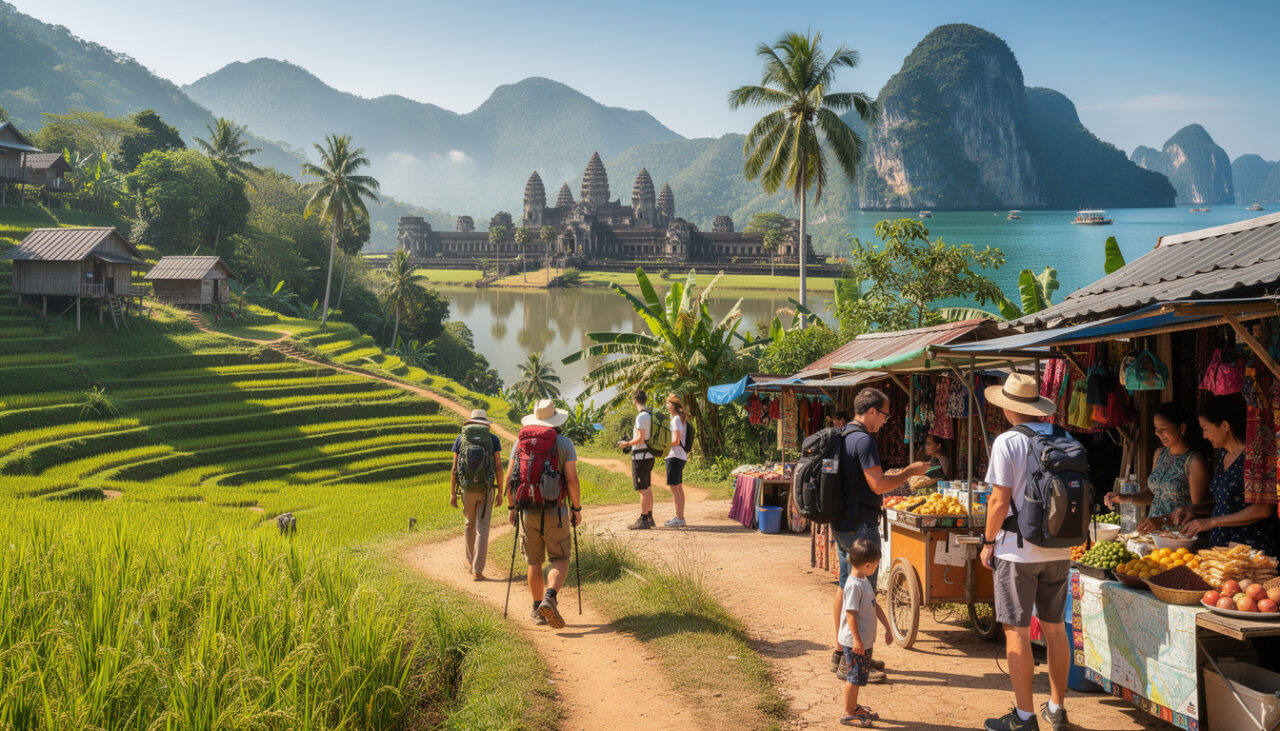
Backpacking Southeast Asia has a way of rewiring the brain of anyone who lands with a one-way ticket, a half-packed bag, and a head full of daydreams. From misty mountain villages in northern Thailand to karst-studded bays in Vietnam and remote Indonesian islands where the road quite literally ends, the region delivers a rare cocktail of adventure, comfort, and affordability. Classic travel routes like the Banana Pancake Trail now weave together buzzing cities, sleepy river towns, jungle-clad hiking trails, and islands where hammocks outnumber cars. Hostels hum with late-night conversations, night markets become dining rooms, and long-distance buses double as moving social clubs. For anyone chasing budget travel that still feels wildly rich in experience, backpacking Southeast Asia remains the gold standard — and with better infrastructure and more flexible visas than ever, plotting a smart itinerary is easier than it’s ever been.
Key points about backpacking routes in Southeast Asia
– 🌏 Classic Southeast Asia travel routes like the Banana Pancake Trail link Thailand, Laos, Vietnam, and Cambodia with easy land borders, cheap buses, and plenty of hostels.
– 🛶 Alternative loops through Indonesia, Malaysia, and the Philippines suit travelers who crave beaches, surf, and island-hopping more than temples and cities.
– 💸 Daily budgets of $25–$45 are realistic for most backpackers, especially when combining street food, shared rooms, and public transport.
– 🛏️ Dorms, homestays, and guesthouses sit side by side with boutique hotels, so every route can be dialed up to comfort or down to bare-bones savings.
– 🌄 Smart itineraries balance long bus days with slower stretches in one spot, keeping energy (and enthusiasm) high across weeks of continuous travel.
– 🤝 Social atmospheres, from hostel bars to slow boats, make the region especially friendly to solo backpackers searching for new friends and shared adventures.
Southeast Asia Backpacking Routes: The Classic Banana Pancake Trail 🥞
The Banana Pancake Trail has become shorthand for the archetypal backpacking route in Southeast Asia, a loose network of towns and border crossings threaded together by cheap buses, rivers, and a shared language of banana pancakes, pad thai, and hostel happy hours. At its heart, this route isn’t just geography; it’s a rolling community of travelers swapping travel tips over instant coffee at 6 a.m. before a border run or a sunrise hike.
One fictional traveler, Maya, lands in Bangkok with a 40L backpack and a vague idea: “head north, drift east, see what happens.” Within a week, her scribbled itinerary turns into a living thing — reshaped by conversations with a German hiker in a dorm bunk, a Lao cafe owner who mentions a hidden waterfall, and a Vietnamese scooter mechanic who knows a shortcut through the hills. That’s the soul of this route: constant recalibration, guided by whispers and chance encounters.
Bangkok to Northern Thailand: Temples, Canyons, and Night Bazaars
Most versions of the Banana Pancake Trail begin in Thailand, where backpackers can ease into Southeast Asia with reliable transport, forgiving street-food prices, and an endless supply of hostels. Bangkok delivers sensory overload — golden temples stacked against glass skyscrapers, grills sizzling on sidewalks, tuk-tuks darting between skytrain pillars. Khao San Road and nearby streets form a first basecamp: noisy, chaotic, but useful when jet-lagged and short on bearings.
From here, classic travel routes fan north to Chiang Mai, either by overnight train or bus. The Old City is ringed by a moat and crammed with temples, cooking schools, and yoga studios. New backpackers often test-drive scooter rentals here, cruising up to Doi Suthep or out to sticky waterfalls. A few hours further on, Pai waits at the end of that famously bendy road, a miniature valley stitched together with bamboo bungalows, canyon sunsets, and live-music bars where strangers become hiking buddies by the second chorus.
Laos and Vietnam: Slow Boats and Mountain Loops
Leaving Thailand behind, travelers often cross into Laos and trade highways for river current. The two-day slow boat from the Thai border to Luang Prabang is almost a rite of passage, a kind of floating orientation into the rhythms of budget travel. People read, play cards, share snacks, and plan the next week together as the jungle slides past. By the time everyone reaches the night market in Luang Prabang, most have a new crew.
Vang Vieng, once infamous for river parties, has quietly evolved into a base for kayaks, limestone caves, and hot-air balloons. Further east, buses rattle across the border into Vietnam, where Hanoi’s Old Quarter greets travelers with tangled alleys, egg coffee, and the chaos of a thousand scooters threading one intersection. From here, many backpackers ride the Ha Giang Loop on motorbikes, tracing remote mountain hiking trails and villages where homestays serve rice wine stronger than the wifi.
Cambodia and the Southern Swing
Another branch of the Banana Pancake Trail leads south from Vietnam into Cambodia. Night buses help travelers stretch time and money, rolling from Ho Chi Minh City to Phnom Penh while everyone dozes under thin blankets. Days in the capital swing between riverside sunsets and heavy historical sites like S-21 and the Killing Fields, grounding all that sand-and-sea escapism in real regional context.
Further northwest, Siem Reap anchors every Southeast Asia backpacking route that cares about old stones and big skies. Sunrise at Angkor Wat arrives with crowds, but even the most jaded traveler can’t fully shrug off the orange glow on ancient towers. Back in town, backpackers refuel on $2 curries and talk about their next leg — maybe the Thai islands, maybe onward to Kuala Lumpur or Bali. The Banana Pancake Trail always points somewhere new.
By the time a traveler completes this loop, what began as a rough line across a map has become something richer: a string of shared experiences that proves why backpacking Southeast Asia still earns its legendary reputation.
Island-Hopping Routes: Thailand, Indonesia, Malaysia, and the Philippines 🏝️
Once the classic route has worked its magic, many travelers crave sea air and salt-dried hair. That’s where the island-hopping routes of Southeast Asia step in, blurring country borders with ferry wakes and reef lines. An archipelago-heavy loop can feel like a different trip entirely: fewer temples, more flip-flops; fewer museums, more coral gardens. Yet the same pillars remain — budget travel, easy friendships, and steady exposure to local culture.
Think of Alex, a software developer taking a career break, who trades his office chair for a battered surfboard. His route zigzags from Thailand’s Krabi coastline to Lombok’s breaks, on to Siargao’s reef passes in the Philippines. Between sessions, he compares scooter crash scars and visa-extension stories with other surfers in palm-shaded hostels. The islands turn into chapters in a single long sea-soaked story.
Southern Thailand: Andaman & Gulf Loops
Southern Thailand works like a choose-your-own-adventure map. On the Andaman side, Krabi, Railay, and Koh Lanta offer dramatic cliffs, caves, and easy snorkel trips. On the Gulf side, Koh Tao, Koh Phangan, and Koh Samui draw divers, party-lovers, and those just looking for a hammock with a reliable breeze.
Backpackers stitch mini-loops together: a week of climbing in Railay, a few nights of fire shows on Koh Phi Phi, and a detox on quieter Koh Lanta. The same logic applies in the Gulf: a full moon party on Phangan, dive courses on Koh Tao, and sunset cocktails on Samui. Simple wooden bungalows sit beside slick beach resorts, letting travelers dial comfort up or down without leaving the island chain.
Indonesia: Beyond the Bali Bubble
Indonesia stretches so far and wide that many underestimate it at first glance. Those who only see Canggu cafes miss volcano sunrises in Java, orangutan jungles in Sumatra, and small Lombok villages where the roads fade into footpaths. Routes here reward slowness. A week can be spent just chasing waterfalls around Ubud, another riding a scooter from rice terrace to rice terrace in northern Bali, another hiking Bromo and Ijen under sulfur-blue night skies.
Boutique stays here can be surprisingly affordable, echoing the way a splurge in Dubai can be softened by clever timing and deals on luxury on a budget. In Java or Lombok, a private bungalow with a pool sometimes costs less than a simple double room in a big European capital. That contrast keeps many backpackers lingering far longer than planned.
Malaysia and the Philippines: Underrated Stars
Malaysia tends to catch those who like variety: tea-covered hills in Cameron Highlands, multicultural food feasts in Penang, and coral-filled marine parks off the Perhentian Islands and Tioman. Kuala Lumpur slots into many travel routes as an air hub, but travelers who dive deeper find night markets, rooftop bars, and neighborhoods where Indian, Chinese, and Malay traditions meet on one colorful street.
The Philippines, woven from thousands of islands, demands a different mindset. Ferry schedules and domestic flights rule every itinerary. Palawan’s lagoons, Bohol’s chocolate hills, and Siargao’s surf breaks all sit far from any land border, which is exactly why they feel like such a payoff. Here, hostels double as logistics centers; whiteboards list boat trips and shared-van plans, and strangers pool cash for island-hopping days that merge snorkel stops with beach bonfires.
- 🏖️ Palawan loop: Puerto Princesa → Port Barton → El Nido → Coron
- 🌊 Siargao circuit: General Luna → Pacifico → island-hopping to Naked/Guyam/Daku Islands
- 🐢 Malaysia’s east coast: Perhentian Islands → Redang → Tioman for turtles and reef dives
- 🧗 Thai Krabi route: Ao Nang → Railay → Koh Lanta for climbing and chilled beaches
Each of these island routes pairs lazy days with bursts of effort — early boats, sandy hikes to viewpoints, or long scooter rides to hidden coves. That ebb and flow is what keeps island-hopping from turning into simple beach lounging; the adventure is never far away.
Sample Itineraries and Timeframes for Backpacking Southeast Asia ⏱️
Good routes answer two questions at once: “Where should this trip go?” and “How should it feel day to day?” Rushing through six countries in three weeks might look impressive on a map, but the lived reality is lost laundry, bus terminals at sunrise, and very little connection with local culture. Thoughtful itineraries carve out time for markets, unplanned nights, and the kind of conversations that only happen when there’s nowhere urgent to be.
Consider a fictional pair of friends, Sam and Jordan. Sam wants every famous sight; Jordan wants space for café mornings and long hikes. Balancing these two urges — ticking boxes and tasting atmosphere — mirrors a tension most backpackers know well. Their compromise becomes a blend of “anchor” cities and flexible in-between days, a rhythm other travelers can borrow.
Three-Week Classic Loop: Thailand, Laos, Vietnam
Three weeks is often the first big test for new backpackers. A well-paced route might start in Bangkok, head north through Chiang Mai and Pai, cut across Laos via Luang Prabang and Vang Vieng, and end in Hanoi with an optional Ha Long Bay side trip. That’s enough variety to feel epic without turning every transfer into a race.
The key is resisting the urge to add “just one more country.” Those extra stamps cost time and energy. Instead, the route leans on overland crossings, night buses, and one strategic flight if needed. With a mixture of dorms and simple guesthouses, daily costs stay manageable without sacrificing the occasional treat: a sunset cocktail rooftop or a guided food tour in Hanoi’s alleyways.
Six-Week Extended Route: Adding Cambodia and an Island Finish
With six weeks, the canvas widens. After looping through northern Thailand and Laos, Sam and Jordan slide down Vietnam’s coast from Hanoi to Hoi An and Ho Chi Minh City, then bus into Cambodia for Phnom Penh and Siem Reap. Rather than sprinting home from Angkor, they cap the trip on a Thai island or a quick Malaysian beach escape.
This kind of itinerary showcases how backpacking can blend city depth with downtime. After the emotional weight of Cambodia’s historical sites, a few days on Koh Rong or Koh Lanta help everyone process. Long swims in bath-warm water do as much work as any formal “rest day.” That balance keeps the second half of the trip as bright as the first.
Three-Month Grand Southeast Asia Route
Travelers with three months unlock the full sweep of Southeast Asia: Thailand, Laos, Vietnam, Cambodia, Malaysia, Indonesia, and sometimes the Philippines or Myanmar where conditions allow. Distances stretch, but so does patience. Laundry days become social events, and bus breakdowns morph from disasters into anecdote fuel.
At this scale, mixing styles matters. Some plan every step; others outline only a skeleton and let the road fill in the details. Long-timers often bounce between hyper-social hostel weeks and quieter periods in local guesthouses or co-living spaces. That ebb and flow mirrors how people sustainably handle long-term adventure, avoiding burnout while still pushing comfort zones.
| Route length ⏳ | Main countries visited 🌏 | Average daily budget 💸 | Travel vibe 😎 |
|---|---|---|---|
| 3 weeks | Thailand, Laos, Vietnam | $30–$45 | Fast-paced highlights, minimal detours |
| 6 weeks | + Cambodia, Thai islands | $30–$50 | Balanced: cities, temples, and beaches |
| 3 months | + Malaysia, Indonesia, option Philippines | $25–$40 | Slow travel, deep dives into local culture |
Whichever timeframe fits, the most satisfying routes leave cracks for serendipity: a side trip to a village festival, an unplanned homestay, a detour to join new friends on their own spur-of-the-moment plan.
Video guides that walk through day-by-day plans can be gold when shaping a first draft route, especially for visualizing transport legs and border hops before committing.
Budget Travel, Hostels, and Daily Costs Across Southeast Asia 💸
Backpacking Southeast Asia has earned its reputation as a budget-friendly dream, but numbers still matter. No one wants to cut a trip short because yesterday’s cocktail bucket turned into a week’s worth of street food. When costs are understood instead of guessed, every choice — from dorm bunks to boutique stays — feels intentional rather than anxious.
A typical backpacker budget in the region lands between $25 and $45 per day, with big swings based on preference. Someone happy with fan rooms, street noodles, and public buses can often hug the lower end. Another traveler drawn to private rooms, air conditioning, massages, and the occasional splurge dinner might settle nearer the top. Both are still far below what the same lifestyles would cost in Paris or LA; it’s closer to what a savvy traveler might spend following carefully planned affordable itineraries in Paris, but with far more sunshine and papayas.
Breaking Down Daily Costs
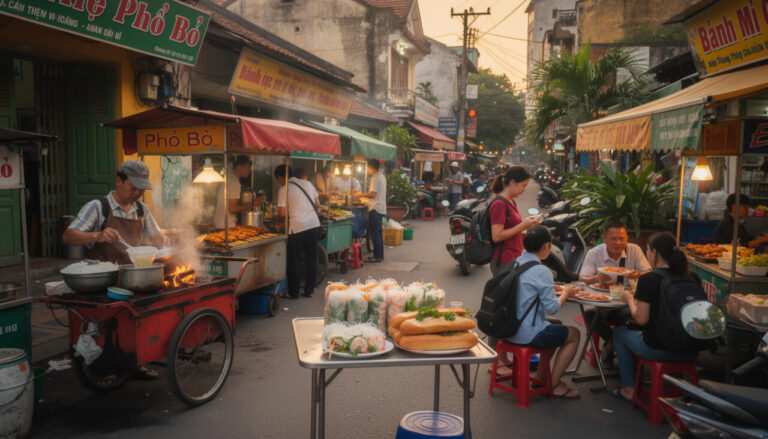
Costs vary by country, but some patterns hold. Food is where value really shines. A bowl of pho in Vietnam or khao soi in northern Thailand often runs under $3, while a sit-down meal with drinks rarely cracks $10. Dorm beds in popular hubs usually float between $8–$15, with smaller towns offering lower prices. Transport swings more widely, from $0.50 city buses to $30–$50 for long-haul or overnight legs.
Activities can be almost-free — temple wandering, street markets, self-guided hikes — or splurge-level, like multi-day dives and guided treks. Many backpackers build a rhythm: several frugal days of near-zero activity costs punctuated by one big-ticket experience, like a Ha Long Bay cruise or a Komodo National Park tour.
Hostels vs Guesthouses vs “Treat Yourself” Stays
Accommodation in Southeast Asia doesn’t sit in neat tiers; it overlaps. A newly renovated hostel with a pool and co-working area might cost less than an older budget hotel with flickering fluorescent lights. Homestays, often listed informally or found by simply walking into a village, can be both cheaper and more comfortable than highly-reviewed urban guesthouses.
Many long-term travelers create a personal rule: four or five nights in budget digs, one in a nicer spot. That “treat” could be a heritage shophouse in Penang, a jungle lodge in Laos, or a mid-range resort on a Thai island. The overall budget barely nudges, but morale soars — hot showers, thick mattresses, and breakfast buffets have a way of refueling both body and motivation.
Saving Without Sacrificing Experience
Smart saving in Southeast Asia rarely means doing less; usually, it means doing things differently. Overnight buses double as transport and accommodation. Walking or cycling in compact cities replaces taxis. Simple habits — carrying a reusable water bottle, refilling at hostel filters, eating where the locals queue — trim costs while deepening contact with local culture.
Solo travelers often worry that “going cheap” will isolate them, but the opposite tends to happen. Dorm rooms, communal kitchens, and shared tuk-tuks spark friendships constantly. Articles on how to make friends while traveling solo often point to hostels as built-in social accelerators, and Southeast Asia’s scene proves the point. Dinners turn into group day trips; group day trips spin off into small crews that spontaneously rewrite their routes together.
- 🥢 Eat where the plastic stools are — busy local stalls signal tasty food and fair prices.
- 🚌 Choose daytime buses on scenic routes, overnight ones on boring stretches.
- 🛏️ Mix dorms with occasional private rooms to recharge without breaking the bank.
- 📶 Grab local SIMs or eSIMs early; avoiding roaming fees frees up cash for actual fun.
- 🏃♀️ Walk “one extra block” before choosing a cafe or guesthouse; prices often drop fast away from main drags.
Handled this way, budgeting stops feeling like restriction and starts feeling like strategy — a set of choices that lengthen the trip and thicken the story.
Watching cost breakdowns from other travelers can give a reality check before departure, especially on categories that frequently surprise people, like alcohol, tours, and “little extras.”
Adventure, Hiking Trails, and Immersing in Local Culture 🥾
Beyond cheap beds and cool cafes, the real power of backpacking Southeast Asia lies in how easily it puts people in motion — hiking, paddling, climbing, and learning. Those who arrive convinced they’re “not outdoorsy” often leave with scarred shins from jungle hiking trails and phone galleries full of headlamp-lit cave selfies. Others who swore they’d “stick to nature” find themselves lingering in city backstreets, following the sound of live music into hole-in-the-wall bars.
Travelers like Lena, a quiet graphic designer from Berlin, routinely surprise themselves here. She starts with a short hike near Chiang Mai, guided by hostel roommates. Weeks later, she’s scrambling up volcanic scree near Mount Bromo before sunrise, swapping trail snacks and life stories with strangers from four continents. The region has that on-ramp effect: everything intense, but rarely inaccessible.
Hikes, Treks, and Volcanic Pushes
From the terraced hills of Sapa to the emerald basins of Laos’ waterfalls, Southeast Asia is full of trails that reward early alarms. Some, like the Kuang Si waterfall paths near Luang Prabang, are beginner-friendly strolls with photogenic payoffs. Others, like overnight treks to Indonesian volcano rims or multi-day walks from Kalaw to Inle Lake in Myanmar (when conditions allow), demand more stamina but pay back with crater views and village homestays.
What stands out is how accessible these experiences stay for new hikers. Guides can often be arranged straight from hostels. Gear like trekking poles and headlamps can be rented cheaply. And even the toughest trails are regularly tackled by people whose last “hike” was a city park walk back home. Shared struggle on steep switchbacks turns otherwise distant travelers into a temporary little family.
Everyday Encounters with Local Culture
Culture in Southeast Asia rarely sits behind glass. It cooks on sidewalks, chants from temple loudspeakers at dawn, splashes during New Year water fights, and hangs from lantern strings across ancient town streets. Travelers often step into it by accident: a tuk-tuk driver invites them to his niece’s graduation party; a food vendor insists on teaching proper chopstick technique; a homestay host shares stories about wartime years over late-night tea.
Respect forms the foundation. Covering shoulders and knees at temples, removing shoes at the door, learning simple phrases like “thank you” or “delicious” in local languages — these tiny efforts change how every interaction feels. People notice. Doors open. Prices sometimes soften. The line between “tourist” and “temporary neighbor” blurs, even if only for a week.
Adventures that Don’t Require a Helmet
Not every thrill involves cliffs or crater rims. Bamboo raft trips, river tubing, island-hopping by long-tail boat, and even navigating mega-city public transport can all count as adventure. Some of the most memorable moments come from soft activities: dawn alms-giving in Luang Prabang, traditional dance performances in Bali, cooking classes in Chiang Mai, or coffee farm tours in Vietnam’s Central Highlands.
These experiences enrich any itinerary far more than an extra museum or yet another rooftop bar. They offer a lens on how people actually live — what they eat when tourists aren’t watching, what they celebrate, what they worry about, and what makes them laugh. When travelers look back, those are the stories they tend to tell first.
- ⛩️ Join a local festival or religious holiday if timing aligns — Songkran, Tet, or Loy Krathong are unforgettable.
- 🍜 Take at least one cooking class; recipes become souvenirs that survive long after keychains are lost.
- 🎭 Seek live music or dance nights instead of another club; culture and nightlife can blend beautifully.
- 📚 Visit at least one small local museum outside the capital — they often reveal what textbooks skip.
Layered this way, backpacking Southeast Asia becomes more than a highlight reel; it transforms into a deep, textured experience that stays vivid long after the backpack is unpacked at home.
Practical Travel Tips and Transport Logistics for Southeast Asia 🚍
Behind every sunset photo lies a small army of logistics: bus tickets, border stamps, hostel check-ins, SIM cards, and ATM withdrawals. The smoother these pieces run, the more energy remains for the truly exciting parts. In Southeast Asia, the infrastructure is set up almost suspiciously well for travelers — but a few smart habits flip “manageable” into “effortless.”
Think of a small group of friends planning to meet in Krabi after starting in different countries. One arrives via overnight bus from Bangkok, another flies in from Hanoi, a third ferries over from Koh Lanta. Their reunion feels casual, but depends on hundreds of unspoken systems: low-cost airlines, bus apps, hostel pickups, border e-visas. The better each friend understands these systems, the less likely they’ll spend their reunion untangling mix-ups instead of clinking Chang beers.
Moving Around: Buses, Trains, Boats, and Budget Flights
Land travel forms the spine of most backpacking routes in Southeast Asia. Day buses connect big cities and smaller crossroads; night buses stretch budgets and time, letting travelers “sleep” their way to the next country. Trains, where available — in Thailand, Vietnam, Malaysia — often offer more comfort and scenery, especially in sleeper classes.
Boats range from slow ferries and Mekong river cruises to fast catamarans between Thai islands or across Indonesian straits. Low-cost airlines fill the gaps, particularly on awkward segments like Bangkok to Bali or Manila to Palawan. A rough rule: bus for under 8 hours, train where it’s scenic, and fly for anything that would steal an entire day or more on the road.
Visas, Borders, and Staying Connected
Visas have grown simpler in much of the region, with many countries offering visa-free stays or e-visas that can be arranged online. Still, every border has its quirks. Carry printed confirmations, passport photos, and spare cash in the local currency or USD. Joining traveler groups online can reveal up-to-date border stories, including unexpected closures or added fees.
Staying connected is less about posting and more about navigating. Local SIM cards or eSIMs purchased on arrival make it easy to summon a Grab bike, translate a menu, or book a last-minute hostel when plans shift. Having offline maps downloaded before long bus rides or treks acts as a quiet safety net — no drama, just confidence.
Staying Safe, Smart, and Flexible
Southeast Asia generally feels welcoming and safe, especially compared to large Western cities. Still, common-sense measures pay off: money belts or anti-theft daypacks for crowded markets, locking dorm lockers even when roommates seem trustworthy, double-checking scooter brakes before riding into the hills. When a tuk-tuk ride feels off or a street seems too dark, trusting that twinge and stepping away saves stories from taking a bad turn.
Flexibility smooths everything else. That “perfect” hostel might be full; that bus might be sold out. Seeing these not as disasters but as nudges towards alternate routes often leads to unexpected gems — a guesthouse run by a family who adopt travelers for a night, a town that wasn’t on the map but ends up a highlight.
- 📱 Download offline maps and key language packs before long transfers.
- 🧾 Keep digital and paper copies of passport data pages and visa approvals.
- 🚖 Use metered taxis or ride-hailing apps where possible; agree on fares elsewhere before riding.
- 💊 Carry a small medical kit: stomach meds, rehydration salts, painkillers, and plasters save many days.
- 🔐 Use hostel lockers and simple cable locks on bags during long bus or train rides.
Handled with this mix of preparation and openness, the “in-between” moments of the journey start feeling less like chores and more like an integrated part of the story — the connective tissue that holds all the wild, beautiful snapshots of backpacking Southeast Asia together.