Foodie Tours in Vietnam: Street Eats Guide
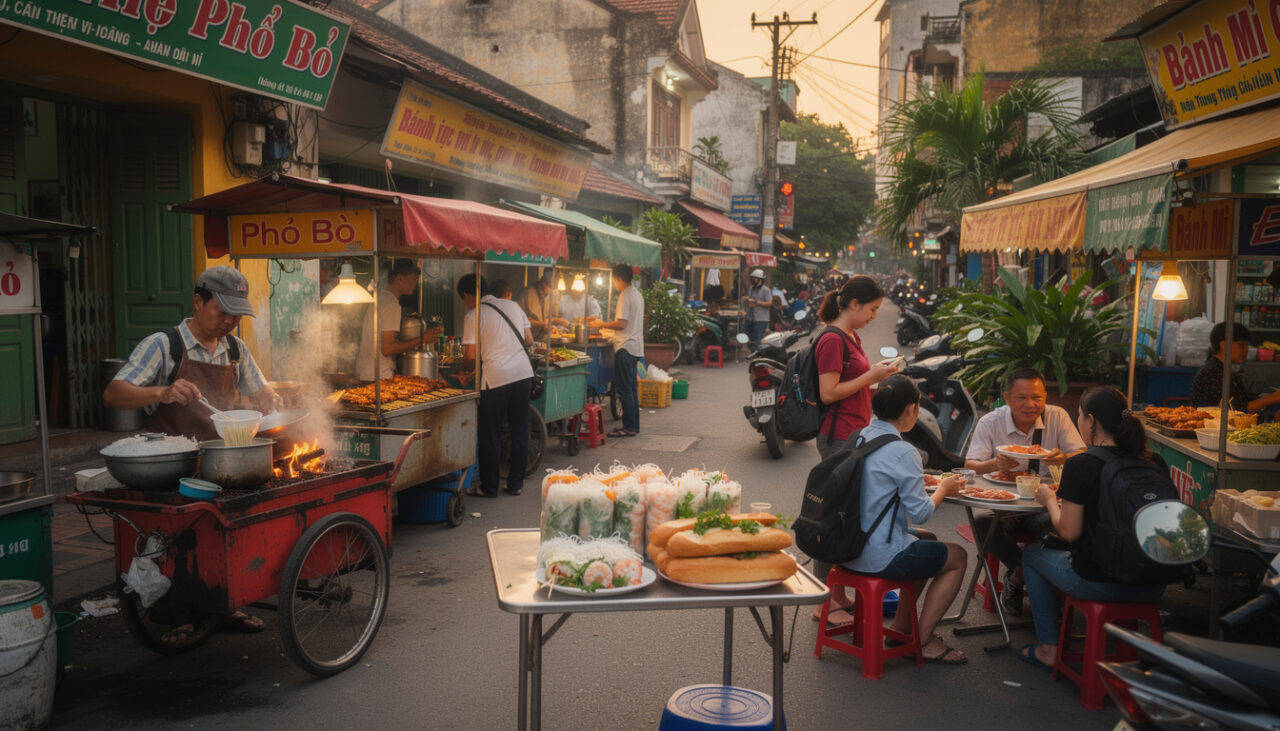
Vietnam’s pavements double as open-air dining rooms, with sizzling woks, clattering chopsticks, and clouds of fragrant steam rising from tiny carts. Street Food here is more than a quick bite; it’s a living map of history, migration, and family recipes passed down through generations. Foodie Tours in Vietnam channel that energy into curated walks, scooter rides, and market adventures that turn every alley into a tasting menu. From broth that’s simmered overnight in Hanoi to Mekong Delta hotpots shared at wooden riverside tables, these Foodie-friendly experiences weave gastronomy, story-telling, and real human encounters into one continuous feast. Anyone chasing Travel that feels both raw and refined will find that Vietnamese Cuisine delivers exactly that mix, dish after dish, city after city.
Key points about foodie tours in Vietnam’s street eats 🇻🇳
- 🍜 Foodie Tours in Vietnam reveal the country’s Street Food culture through guided walks, scooter rides, and market visits, connecting travelers directly with local cooks.
- 🥢 Hanoi, Hue, Hoi An, and Ho Chi Minh City each offer distinct Local Delights, from smoky bun cha and royal Hue tastings to iconic cao lau and sizzling banh xeo.
- 🕒 Timing meals with the local rhythm — dawn markets, worker lunches, and neon-lit night stalls — turns a simple Food Guide into an authentic snapshot of daily life.
- 🛵 A 10‑day north–south route combines must‑try Eats, hidden alleys, and café culture with wellness‑friendly hotels and scenic journeys like the Hai Van Pass and Mekong canals.
- 🎯 Smart etiquette, a few Vietnamese phrases, and choosing crowded, clean stalls help travelers eat confidently while respecting the culture and savoring the best Gastronomy.
Foodie Tours in Vietnam: Why Street Eats Feel Like a Parallel Universe
Walk into Hanoi’s Old Quarter at breakfast and the city seems to run on noodle steam. Motorbikes weave past soup pots big enough to bathe in, and every door frame hides a micro-restaurant with five plastic stools and one specialty. Foodie Tours in Vietnam tap into this parallel universe, where pavements become kitchens and the day is measured not in hours but in courses. A guided Street Food walk doesn’t just point at famous dishes; it decodes the choreography behind them — the vendor who preps pork at 3 a.m., the grandmother who seasons a broth strictly by instinct, the teenager who dashes bowls across the alley like relay batons.
Vietnam’s Cuisine evolved at the crossroads of China, France, and Southeast Asia, which explains why a single street can serve baguette-based banh mi next to rice-noodle pho, alongside iced coffee that tastes like liquid dark chocolate. Foodie Tours turn that complexity into something approachable. Guides share stories of wartime rationing that created creative snacks, of royal Hue recipes once reserved for emperors, and of migrant families from the Mekong who reinvented classics with coconut milk and tropical herbs. Suddenly, what looks like a cheap bowl of noodles becomes a crash course in history, politics, and climate.
For many travelers, the hurdle isn’t curiosity; it’s confidence. “Which cart is safe? How spicy is too spicy? Will the vendor understand?” That’s where curated Tours change the game. A good guide steers guests toward stalls where turnover is high, prep is transparent, and flavors are bold but balanced. Instead of pointing randomly at pictures, visitors learn how to read a menu board, how to season with nuoc mam and lime, and when to say “ít cay” (less chili) with a grin. Those small wins stack up, and by the third night, even cautious eaters are negotiating their own late-night banh trang nuong like regulars.
Behind many of these experiences stands a quiet network of local travel designers. One example often mentioned by repeat visitors is a Hanoi-based team that crafts Foodie-focused itineraries from eight to fifteen days, mixing Street Food hunts with comfortable 4‑star hotels and wellness-friendly pacing. Guests hop from pho at dawn to a mid-morning spa session, from night markets to riverside yoga. The point is not to conquer every dish, but to savor Vietnam’s Gastronomy at a human pace, with room for naps, massages, and slow coffees between the bites.
Testimonials from small groups echo the same theme: Food Tours become the emotional backbone of the trip. A group of four couples exploring Sapa raved less about viewpoints than about the guide who translated jokes with a grill master, turning a smoky barbecue into a shared memory. A family who traveled from Hanoi down to Ho Chi Minh City remembered the way their guide volunteered again and again to snap group photos over steaming bowls, understanding that Travel is as much about the people in the frame as the dish on the table.
Anyone who has already explored other gastronomic playgrounds — whether chasing tapas in Spain’s coastal towns like those described in hidden gem Spanish escapes or seeking pasta and sunset dinners through curated romantic Italian getaways — will sense a familiar thrill here. Yet Vietnam’s Street Food scene adds a different voltage: smaller stools, brighter herbs, louder scooters, and a generous, unpretentious pride that says, “This bowl is our story, have a seat.” That mix of chaos and kindness is why Foodie Tours in Vietnam rarely feel like standard sightseeing. They feel like being welcomed into a parallel universe where the real action unfolds at ground level, plate by plate.
The heart of that parallel universe beats differently in each region, so the next step is clear: trace the flavors from north to south and watch how the menu shape-shifts with every hundred kilometers.
North to South: Regional Foodie Tours and Street Eats You Can’t Skip
Stretch Vietnam’s map between two hands and every few centimeters mark a new flavor. Foodie Tours ride this gradient from cool, herb-forward dishes in Hanoi to coconut-laced recipes in the Mekong Delta. Travelers following a north–south path quickly notice how the same noodle shape morphs with climate, history, and local produce. That’s why the smartest Food Guide doesn’t treat “Vietnamese food” as a single category, but as a moving feast in three big chapters: north, center, and south.
Hanoi and the North: Steam, Smoke, and Strong Coffee ☕
In Hanoi, mornings start early and quietly. Locals crouch on sidewalks over bowls of pho thin, where beef is first stir-fried with aromatics before swimming in a clear, fragrant broth. A Hanoi Street Food Tour often begins around sunrise in the Old Quarter, when the alleyways still belong to market vendors and office workers rather than selfie sticks. Guests might try xoi — sticky rice topped with mung bean paste or shredded chicken — eaten under tangled power lines as the city wakes up.
Guides tend to weave in stops at Dong Xuan Market, a covered maze where sacks of dried shiitakes perfume the air and families sell herbs with names most visitors have never heard. One stall ladles out banh cuon, delicate steamed rice rolls filled with minced pork and wood ear mushrooms, finished with fried shallots and ladles of warm fish sauce. Another specializes in egg coffee, the creamy Hanoi icon whisked with egg yolk until it tastes like tiramisu in a cup. Foodie Tours here lean into contrasts: old French villas neighboring noodle shacks, third-wave cafés sharing streets with grandmothers cooking over charcoal.
Venturing to the countryside around Hanoi, travelers might join day trips to villages known for a single craft or recipe. One village cures pork into chewy fermented sausage, another makes rice wine, another grows herbs destined for bun cha. That grilled pork and vermicelli combo became world-famous after a U.S. president and a TV chef slurped it down in a tiny shop; Tours still stop nearby to explain how such a humble dish captured global attention. The charm lies in its balance: smoky pork, cool herbs, crisp pickles, and a dipping sauce that tastes like citrus, caramel, and sea breeze at once.
Central Vietnam: Hue, Da Nang, and Hoi An’s Royal Rustic Fusion 🎎
Head past misty passes into central Vietnam and the mood shifts. The imperial city of Hue once fed royalty, and the Street Food still reflects that legacy. Tiny plates of banh beo — steamed rice disks topped with shrimp and crispy pork — arrive like edible confetti. Banh nam, soft rice cakes wrapped in banana leaves, and nem lui, lemongrass skewers grilled over coals, turn a plastic-table dinner into a tasting menu. Foodie Tours in Hue often pair tastings with visits to the citadel, threading stories about emperors and court Cuisine into each bite.
Further along the coast, Da Nang acts as a bridge between workaday port life and vacation-energy beaches. Many Foodie itineraries only pause here briefly, but locals know the city for mi quang, a turmeric-tinted noodle dish loaded with prawns, pork, herbs, and toasted peanuts. Eating it under neon lights with a sea breeze sneaking down the avenue feels miles away from Hanoi’s misty mornings, even though the bowl still leans on rice noodles and fish sauce.
Hoi An, by contrast, is a time capsule washed in lantern light. Food Tours here lean into both romance and rusticity. Cao lau, the town’s signature noodle, uses water drawn from an ancient well and noodles pre-soaked in lye ash, giving them a distinctive chew. Topped with pork, crackling, herbs, and a dark, savory broth, it encapsulates Hoi An’s layered heritage as a trading port. Guests often queue willingly at a banh mi shop made famous by chefs and TV shows, where crusty baguettes explode with pate, grilled pork, herbs, and pickled vegetables. The queues become conversations; strangers swap Travel tips, talk about their favorite Local Delights, and leave with chili-smeared fingers.
Ho Chi Minh City and the Mekong: High Voltage Flavors 🌶️
By the time Foodie Tours reach Ho Chi Minh City, the energy dials up. Streets here pulse late into the night, and Street Food mirrors that ambition. Com tam, broken rice with grilled pork, pickled vegetables, and a fried egg, anchors many daytime menus. At night, banh xeo — massive rice flour crepes speckled with turmeric and stuffed with shrimp and bean sprouts — crackle on skillets, their edges lacy and crisp. Guided Food safaris usually orbit Ben Thanh Market, Bui Vien’s neon chaos, and District 5’s Chinese-Vietnamese enclaves.
District 5, especially, opens a window into a different layer of Vietnamese Gastronomy. Wonton soups, roasted ducks hanging behind glass, and black sesame desserts share the same streets as herbal medicine shops. Travelers seated at foldable tables might realize they are slurping a hybrid Cuisine shaped by centuries of migration. The chatter bounces between Cantonese, Vietnamese, and English, proving that Foodie Tours are as much about listening as tasting.
A day trip to the Mekong Delta rounds out the southern chapter. Wooden boats glide past river islets where coconut candy gets pulled by hand and honey tea arrives in chipped cups. Lunch at a riverside home often features ca tai tuong chien xu — whole “elephant ear” fish deep-fried upright, crisp skin ready to wrap in rice paper with herbs — and lau mam, a fermented fish hotpot that scares some noses but wins many hearts. Travelers who arrive wary of strong smells often leave with stories of their “fermented fish turning point,” a moment of culinary bravery that becomes their favorite anecdote back home.
Across all these regions, the pattern stays consistent: Travel, when guided by flavor, traces deeper currents of migration, empire, and resilience. Foodie Tours in Vietnam translate those currents into bites that linger far longer than the heat of the chili.
How to Eat Like a Local on Vietnamese Street Food Tours
Arriving in Vietnam without a plan for Street Food can feel like stepping into a library with no catalogue. Everything smells incredible, nothing is labeled in a familiar language, and the locals move with practiced certainty. A thoughtful Food Guide helps, but learning to eat like a local transforms every solo wander into a micro Foodie Tour. Master the rhythm of meal times, the unspoken etiquette of plastic stools, and a handful of phrases, and the city opens up plate by plate.
Timing Your Eats with the Local Rhythm ⏰
Vietnam’s day is punctuated by specific windows when certain dishes shine. Pho at 10 p.m. tastes fine; pho at 7 a.m., with the city yawning awake and mist rising from the broth, feels transcendent. Morning markets double as breakfast buffets: vendors ladle out xoi, warm soy milk, and chicken glass noodles to a crowd of workers and schoolkids. Sitting shoulder-to-shoulder, visitors become part of the daily choreography instead of spectators.
Midday, from roughly 11:30 to 1 p.m., attention shifts to com binh dan — “people’s rice” canteens where office employees and motorbike drivers point at trays of stir-fries, braised fish, sauteed greens, and tofu, all piled onto rice. Joining that queue reveals which dishes locals gravitate toward in real life, beyond the “must-eats” of guidebooks. Evening, after 6 p.m., is prime Street Food theater. Night markets ignite, families appear with kids in tow, and stalls serve everything from banh mi to grilled seafood while friends debrief their day over iced tea and beer.
Choosing the Right Stall Like a Pro 🧐
Locals rarely consult reviews; they read the street itself. Foodie Tours teach guests to do the same. Three signals matter: cleanliness, freshness, and crowd. A clean stall doesn’t mean sterile perfection; it means utensils stacked neatly, chopping boards regularly wiped, and raw and cooked foods kept separate. Freshness shows in vivid herbs, bright chili slices, and meat sizzling on demand rather than languishing on trays.
Perhaps the most reliable guide is the clientele. If an unassuming corner cart attracts a steady stream of regulars, parents with children, or uniformed workers, chances are the food is both safe and delicious. Guides often share a little secret: when torn between two options, follow the biggest queue of locals, not the prettiest sign. That rule works as well in Hanoi as it does for tapas bars in Spain or bistros in Italy.
Speaking Food: Handy Vietnamese Phrases 🗣️
A few words loosen barriers instantly. Saying “Em ơi!” with a smile catches a server’s attention in a friendly way. Ordering “một suất” signals one portion; “ăn chay” protects vegetarians from surprise meat; “tính tiền” gracefully requests the bill. The phrase that earns the brightest grins is “ngon quá!” — “so delicious!”
Foodie Tours often turn language into a game. Guides encourage guests to try these phrases at each stop, and vendors respond with laughs, corrected tones, or extra herbs. That playful exchange cements the understanding that Travel is a dialogue, not a one-way transaction. Over days, visitors feel more like repeat neighbors than anonymous customers.
Condiment Culture: Customizing Every Bite 🧂
On Vietnamese tables, condiments are not afterthoughts; they are a personal paintbox. Nuoc mam (fish sauce) adds depth, tuong ớt (chili sauce or paste) contributes heat, lime wedges brighten richness, and pickled vegetables cut through fat. Fresh herbs — mint, cilantro, basil — land in thick handfuls, ready to be torn into soups and noodle bowls.
Guides often suggest a ritual. Taste a dish once as served. Then whisper to the table, “Now, build your version.” A squeeze of lime, a sliver of chili, some crunchy pickles, a fistful of herbs — suddenly the same bowl tastes wildly different for each person. That communal tinkering reinforces how Vietnamese Cuisine embraces individuality within tradition.
Quick Street-Table Cheat Sheet 📋
To keep all these nuances straight, travelers benefit from a simple reference. Many Foodie Tours hand out cards; a mental card works too.
| ⏱️ Moment | 🍽️ Typical Street Eats | ✅ Local-style Tip |
|---|---|---|
| Early morning | Pho, xoi, soy milk, strong coffee ☕ | Sit on low stools with office workers, keep toppings simple at first. |
| Midday | Com binh dan rice plates, bun bo, fresh fruit 🍍 | Point at dishes; copy locals’ choices for the freshest options. |
| Evening | Banh mi, bun cha, banh xeo, grilled seafood 🦐 | Look for families and groups laughing loudly — that’s a flavor beacon. |
| Late night | Skewers, congee, che desserts, smoothies 🥤 | Start mild on spice; ask “ít cay” if you’re unsure. |
Eating like a local turns every corner into a tasting room. Once travelers sync to that rhythm, even a spontaneous solo walk becomes as rewarding as the most carefully curated Foodie Tour.
10-Day Foodie Tour Route Through Vietnam’s Best Street Eats
Some travelers crave structure with their spontaneity — a backbone of must-try Eats that still leaves room for detours. A classic 10‑day north–south route has become a favorite template, especially for those balancing appetite with comfort. It threads Vietnam’s major Street Food hubs with scenic journeys, thoughtful hotel choices, and just enough downtime for massages, pool laps, or journaling between feasts.
Hanoi: Landing Gently into the Chaos 🛬
Day one usually centers on arrival and decompression. A transfer to a small, central hotel in the Old Quarter keeps jet-lagged travelers close to action without demanding it. A Walk around Hoan Kiem Lake, watching locals practice tai chi or ballroom dancing under trees, eases visitors into the rhythm of the city. Dinner might be as simple as rice porridge or chicken glass noodles at a quiet corner shop — a soft, comforting start before the full Foodie sprint begins.
Day two flips the switch. A morning bowl of pho thin at a decades-old address sets the tone: brisk service, no-frills decor, flavor dialed all the way up. A walking Tour zigzags through the Old Quarter, stopping for bun cha, fried spring rolls, and bia hoi — fresh draft beer poured into tiny glasses. Stories flow about how a single grill or coffee shop became a mini-legend, and how generations continue the work today.
Railway Tracks and Royal Cities 🚂
On day three, the focus often shifts to markets and that Instagram-famous Train Street. At Dong Xuan Market, snacks like xoi with peanuts and corn or delicate banh cuon provide fuel. Later, guests settle inches from railway tracks with egg or coconut coffee, watching a train rumble past so close they can feel the wind off the metal. The day ends at the railway station again, this time boarding an overnight soft-sleeper train southward. Rocked to sleep in a four-berth cabin, travelers literally dream their way into the next culinary chapter.
By sunrise on day four, Hue appears outside the window. After a shower and a short rest at a bright city hotel, Foodie exploration resumes. Touring the imperial citadel with a guide who knows both dynastic gossip and Street Food stalls creates a rich double exposure: ancient walls by day, tiny plates of banh beo and banh khoai by night. Dinner at a beloved local restaurant strings together grilled skewers, rice cakes, and sweet sesame desserts until the table looks like an edible mosaic.
Passes, Lanterns, and Cooking Lessons 🧑🍳
Day five often becomes a highlight. A vehicle winds along the Hai Van Pass, with stops for coconut juice overlooking lagoons. By afternoon, travelers step into Hoi An’s storybook streets and check into a riverside hideaway. After a rest, the evening tasting Tour begins: cao lau, fried wontons, and the famous banh mi shop whose queues curl around the block. Nguyen Hoang Night Market glows with lanterns, corn milk, and souvenirs that smell faintly of incense and sugar.
On day six, the script flips again from eater to cook. A morning cooking class leads guests through a local market — learning how to choose ripe herbs, sniffing fish sauce before it ever touches a pan — and then onto a riverside school. Under guidance, they mix batters for banh xeo, roll fresh spring rolls, and simmer broth. Lunch becomes a reward earned with chopping and stirring. Afternoon hours stretch for exploring craft workshops or lounging by the pool. At night, a gentle riverside stroll with tofu pudding and coconut ice cream keeps things light.
Saigon, Nightlife, and the Mekong’s Slow Pulse 🛵
Day seven’s flight to Ho Chi Minh City marks the final act. A downtown hotel in District 1 provides a calm base, and a simple bowl of bun thit nuong nearby readies stomachs. As darkness falls, Bui Vien Street floods with sound. Foodie Tours here duck into side alleys for Vietnamese “pizza” on rice paper, braised offal for the adventurous, and cups of sugarcane juice spiked with durian for those chasing new flavors. Neon reflects off wet pavements while motorbikes thread through the crowd.
On day eight, Ben Thanh Market becomes an edible maze. Banh xeo, fresh spring rolls, and fruit dusted with chili salt tempt from every direction. Spice stalls sell packets of coffee, dried mango, and lotus seeds that will later turn into gifts for friends. Midday, a pilgrimage to com tam specialists introduces caramelized pork and broken rice. Later, a hidden café using old-school cloth filters serves thick, aromatic coffee that tastes like an edible memory. Evening belongs to District 5’s Chinese-Vietnamese arcades, where wonton soup, roast duck, and black sesame pudding share the table.
Day nine slows things down with a Mekong Delta escape. Wooden boats weave between islets; hands pull sticky coconut candy, and bees hum around honeycomb. Lunch is served family-style at a riverside home, featuring that crunchy whole fish and a bubbling fermented hotpot. Guests pedal bikes along palm-fringed paths or slide quietly through narrow canals in sampans. Back in Saigon, a farewell dinner on a rooftop restaurant ties city lights and last bites of localized classics into one final memory.
Day ten, departure day, keeps things simple: hotel breakfast, last-minute shopping for coffee or spices, a private transfer, and one last “cảm ơn” to the country that has just fed both stomach and spirit. Many leave already plotting a return — perhaps longer, looser, maybe even merging future Foodie adventures with broader itineraries or small-group getaways like those described in guides to traveling solo or with friends.
Used this way, a 10‑day Food Guide stops being a checklist and becomes a spine. On that spine, every stall, conversation, and improvised stop adds vertebrae, building a story travelers will retell for years.
Practical Food Guide: Safety, Comfort, and Mindful Travel Through Vietnam’s Cuisine
Passion carries Foodie travelers a long way, but practical know-how keeps them healthy and energized. Street Food in Vietnam has earned its reputation precisely because locals eat it daily. With a few grounded habits, visitors can savor those same Local Delights confidently, even when hopping from north to south at a brisk pace.
Staying Healthy While Eating Everything (Almost) 🩺
The best defense is observation. Watch how vendors handle food. Are raw ingredients and cooked dishes kept apart? Are herbs rinsed in clear water? Are bowls stacked upside down to stay clean? These details matter more than fancy decor. Choosing stalls with high turnover ensures ingredients don’t linger at room temperature for hours.
Many Foodie Tours quietly build this logic into their routes, favoring long-time vendors known to serve generations of locals. Travelers with sensitive stomachs can start with cooked dishes — grilled meats, stir-fries, soups — before diving into raw herbs and salads. Hydration helps; alternating strong coffee and beer with bottled water or iced tea keeps energy levels up in Vietnam’s humidity.
Balancing Indulgence with Rest and Wellness 🌿
Food-focused Travel tempts everyone to sprint from stall to stall, but the most satisfying experiences often happen when there’s space between meals. That’s where hotel choice shows its value. Mid-range boutiques with decent soundproofing, good mattresses, and maybe a small spa help reset body and mind overnight, making each new round of Eats feel exciting rather than exhausting.
Some multi-day Foodie-focused itineraries deliberately mix intense grazing days with lighter ones. After a heavy night of grilled meats and pancakes, the following morning might feature a simpler breakfast and a gentle activity — a river cruise, a temple visit, or even just café-hopping with lighter snacks. That ebb and flow respects both the body and the flavors, ensuring dishes are remembered not as “too much,” but as just right.
Ethical Eating: Respecting People Behind the Plates 🤝
Every bowl of noodles carries human effort. Ethical Foodie Travel keeps that in focus. Respect starts with basics: waiting your turn even when you’re curious and hungry, disposing of trash in bins instead of under the table, and asking permission before photographing someone working over a grill. A simple smile and a “cảm ơn” go a long way toward balancing the lens between diner and cook.
Some Tours channel part of their revenue into community projects, training local guides, or sponsoring English classes for vendor families’ children. Travelers who care about impact can ask operators about these efforts. Supporting such initiatives means each bite nourishes more than one person — the diner today and the community tomorrow.
Packing for Street Food Success 🎒
A tiny kit in a daypack can dramatically upgrade comfort. Thoughtful Foodie travelers often carry:
- 🧻 A small pack of tissues or napkins for sauce-splattered fingers.
- 🧴 Hand sanitizer to use before meals when sinks aren’t nearby.
- 😎 A light scarf or hat for shade during midday market walks.
- 💊 A basic set of personal medications for indigestion or mild allergies.
- 📱 A translation app download of Vietnamese for menus and quick phrases.
None of these items interfere with spontaneity; they protect it. When travelers feel comfortable, they say “yes” more easily to unexpected invitations: a vendor offering a new dipping sauce, a guide suggesting one more alley, a local family sliding over to make room at their table.
Using Food as a Bridge, Not a Checklist 🌉
It can be tempting to treat Vietnam’s Gastronomy like a bingo card: pho ✅, banh mi ✅, egg coffee ✅. Foodie Tours become far richer when curiosity shifts from “What can be crossed off?” to “Who made this, and why this way?” Asking a guide why Hue’s dishes come in tiny portions, or how a Mekong family started hosting lunches, yields stories that stick longer than flavor memory alone.
Food is one of the few Travel experiences that engages all senses at once. When guests step away from their own expectations — maybe trying that fermented hotpot, or accepting a slightly wobbly plastic chair — they signal trust. Locals often respond with extra care, extra laughs, sometimes extra toppings. That give-and-take is what turns a tour into a relationship, even if it lasts only the span of a meal.
Approached mindfully, Vietnam’s Street Food scene becomes both playground and classroom. Safety habits, respect, and thoughtful pacing don’t reduce the adventure; they sharpen its flavors. Every bowl, every skewer, every crepe becomes another line in a story of connection — a story that keeps unfolding long after the last chopsticks have been set down.
For travelers chasing the next vivid memory — the clink of tiny glasses on a Hanoi sidewalk, the crackle of banh xeo batter hitting a hot pan, the low murmur of a Mekong river lunch — Foodie Tours in Vietnam offer a Street Food Guide written not on paper, but in steam, laughter, and neon light.