Luxury Train Journeys Through Europe
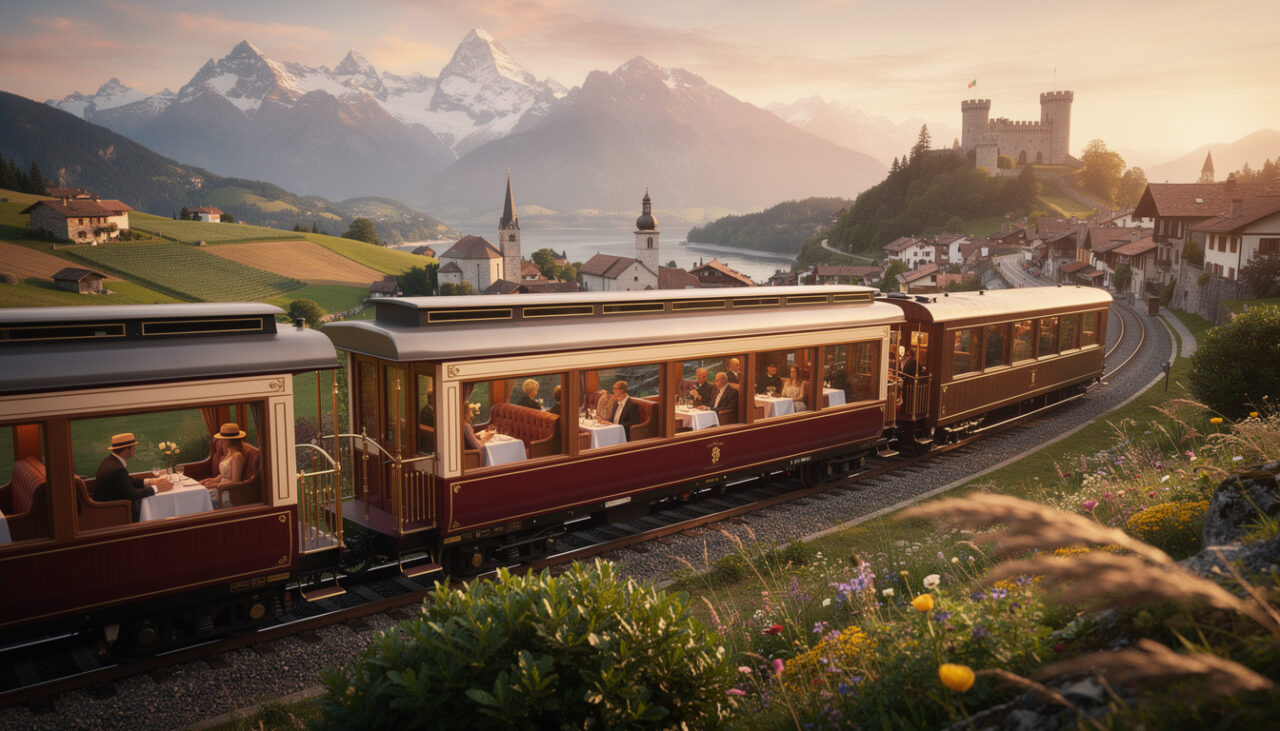
Luxury train journeys through Europe turn the continent into a moving theatre of mountains, coastlines, castles, and cities, all framed by polished wood, crystal glasses, and the comforting rhythm of the tracks. When a traveler swaps cramped flights for a glamorous railway carriage, the pace of travel softens, conversations deepen, and the changing light over alpine peaks or Spanish vineyards becomes part of the itinerary. Plush cabins, gourmet dining, and curated excursions meet raw, scenic drama: fjords in Norway, the Black Forest canopy in Germany, the gilded domes of Venice, and the rugged Atlantic coastline of northern Spain. For those drawn to elegance and adventure rather than simple A‑to‑B transport, Europe’s luxury trains offer a rare combination of nostalgia and contemporary comfort, from iconic names such as the Venice Simplon‑Orient‑Express to new “hotel on rails” concepts that stretch over several countries in a single journey.
Key points about luxury train journeys through Europe
– 🚆 Luxury train journeys across Europe turn travel into an experience where the journey is the destination, blending nostalgia with contemporary comfort and wellness.
– 🌄 The article explores classic routes such as the Venice Simplon‑Orient‑Express and Belmond Royal Scotsman, alongside alpine legends like the Bernina Express and the dramatic Flåm Line in Norway.
– 🥂 Readers discover how sleeper “hotels on rails” like the Golden Eagle Danube Express and Spanish icons such as Al Andalus and Transcantábrico Gran Lujo weave scenic landscapes with gourmet dining and cultural stops.
– 🌍 A fictional couple, Ella and Marc, illustrate how travelers can mix luxury rail with coastal retreats, ski escapes, or river cruises, linking trains with broader European tourism itineraries.
– 💶 Practical comparison of routes, comfort levels, and trip length helps decide which railway adventure suits honeymooners, wellness seekers, or culture lovers planning their next grand tour of Europe.
Venice Simplon‑Orient‑Express & Belmond Royal Scotsman: Icons of Luxury Train Travel in Europe
Some names in luxury train travel carry an aura that can be felt even before a ticket is booked. The Venice Simplon‑Orient‑Express and the Belmond Royal Scotsman sit at the very top of that list, evoking crystal chandeliers, wood‑paneled corridors, and the soft clink of glasses in a bar car glowing with lamplight. For travelers like Ella and Marc, a fictional couple planning a special anniversary escape, these trains are less about speed and more about stepping into an ongoing story that connects generations of travelers across Europe.
The Venice Simplon‑Orient‑Express, reimagined from its 1883 heritage, threads its way between London, Paris, Innsbruck, Verona, and Venice with a kind of quiet theatricality. The carriages, many restored from the 1920s and 1930s, feel like moving film sets: polished marquetry, Art Deco lamps, and plush banquettes where multi‑course dinners unfold under starched white linens. 🥂 Every detail, from the china to the silver, seems designed to slow down the evening and turn dinner into a ceremony rather than a quick refuel stop.
On a typical London–Venice run, the “plot” of the journey unfolds in acts. Boarding in London, daywear gives way to cocktail dresses and dinner jackets before the train even reaches the Channel. By the time the route skirts the Alps, a hush often falls over the dining car as the view takes over: wide valleys, secluded farmhouses, and mountain silhouettes fading into dusk. For Ella and Marc, the highlight might be stepping back into their cabin after dinner to find it transformed into a cozy bedroom, blinds drawn, crisp sheets turned down, and a faint scent of polished wood in the air.
Up in Scotland, the Belmond Royal Scotsman offers a very different stage but the same commitment to elegance. Here the carriages channel the atmosphere of a country house rather than a grand continental hotel. Tartan accents, soft tweeds, and old‑world armchairs line lounges where guests share stories over single malt whiskies. The train carves through the Scottish Highlands, allowing scenes of moors, lochs, pine forests, and distant peaks to roll gently past wide windows and an open‑air veranda.
A four‑day Highland itinerary typically includes castle visits, distillery tours, and walks on remote estates, but what sets it apart is the sense that travelers become a temporary clan. Faced with the shared drama of Highland weather and constantly shifting light, strangers quickly start swapping stories like old friends. The spa carriage adds an unexpected twist: as the train crosses wild landscapes, guests lie back for a hot stone massage or facial, the rhythm of the rails adding a subconscious sway to the treatment.
Both icons illustrate how luxury train journeys in Europe blend heritage and comfort rather than chasing novelty. The Venice Simplon‑Orient‑Express offers cosmopolitan glamour and the thrill of arriving in Venice by rail, gliding into Santa Lucia station as domes and campaniles come into view. The Royal Scotsman, in contrast, leans into rugged nature, with evenings of storytelling, whisky tastings, and Highland air lingering on passengers’ coats after veranda photo stops. Each route hands travelers a different kind of memory, but both encourage them to savor time rather than race through it.
These grand dames of the rails also pair beautifully with stays on land. Guests stepping off in Venice often follow with a few days of lagoon‑side romance, drawing on inspiration like the itineraries from romantic Italy getaways to stretch the magic beyond the tracks. In Scotland, a post‑train retreat at a loch‑side lodge completes the sense of having escaped everyday life entirely. For anyone craving classic elegance and slow‑burn adventure, these two trains feel like the natural entry point into Europe’s luxury railway world.
Key takeaway from these icons: they prove that glamour and authenticity can ride the same rails, turning a simple transfer into a story worth retelling for years. ✨
Alpine & Nordic Rail Legends: Bernina Express, Flåm Line and Beyond
While the Venice Simplon‑Orient‑Express and Royal Scotsman radiate classic opulence, the alpine and Nordic legends show another side of luxury train journeys in Europe: nature as the star, with glass‑walled carriages and dramatic gradients replacing tuxedos and tuxedoed waiters. For travelers like Ella and Marc, who split their vacations between pampered comfort and raw landscapes, routes such as the Bernina Express in Switzerland or the Flåm Line in Norway are irresistible.
The Bernina Express runs across the Swiss Alps between Chur and Tirano, gliding across more than 200 bridges and plunging through over 50 tunnels. The narrow‑gauge railway climbs to nearly 7,400 feet at Ospizio Bernina, where the air thins and the views suddenly feel panoramic rather than scenic. Huge picture windows wrap the carriages, turning glaciers, frozen lakes, and tight mountain curves into an almost cinematic experience. ❄️ At certain points, it feels as though the train is threading a needle through peaks and ridges, each bend revealing a new composition of snow, rock, and sky.
The UNESCO‑listed segment between Thusis and Tirano reinforces the idea that some of Europe’s finest “artworks” are landscapes shaped by time and weather. While the Bernina Express is not a sleeper train with butlers and private bathrooms, its version of luxury lies in precision engineering, spotless carriages, and the privilege of watching an entire alpine ecosystem pass slowly from your seat. Coffee, hot chocolate, and Swiss pastries appear at just the right moment, turning the journey into a refined daylong excursion rather than a simple transfer between two towns.
Further north, the Flåm Line in western Norway redefines the word “dramatic.” Starting at sea level in the village of Flåm, at the end of the Aurlandsfjord, the railway climbs steeply toward Myrdal station through a landscape carved by ice and water. The gradients are some of the steepest of any conventional railway in the world, but the train moves slowly, allowing guests to absorb the surroundings: waterfalls cascading off snow‑capped cliffs, deep ravines, small farms clinging to improbable slopes. 🚞
A highlight of the Flåm Line is the stop near Kjosfossen waterfall, dropping more than 300 feet in a roaring curtain of spray. Norwegian folklore bubbles up here with tales of the Huldra, mythical forest creatures said to lure travelers with their song. While the stories add a touch of mystery, what strikes most passengers is the sheer power of the landscape—the sense that the train is borrowing a path through a world shaped by ancient forces.
To the east, Germany’s Black Forest Railway offers a very different flavor of scenic travel. Named for the dense canopy that makes some slopes appear almost black, this line in Baden‑Württemberg snakes through granite and sandstone hills, past half‑timbered villages and lakes like Titisee and Schluchsee. The stretch between Hornberg and St. Georgen is often singled out as the most captivating, with closely packed tunnels, viaducts, and sweeping valley views. 🌲
On a sunny afternoon, Ella and Marc might step off at a village station to wander among cuckoo‑clock shops and bakeries stacked with Black Forest cherry cake, then reboard a later train, proof that not every luxury railway moment needs white gloves; sometimes soft seats, wide windows, and the freedom to hop on and off feel just as indulgent.
For travelers comparing these routes, a few patterns emerge:
- 🏔️ Bernina Express: Ideal for those who want extreme alpine scenery, UNESCO recognition, and glass‑domed carriages in a single day trip.
- 🌊 Flåm Line: Best for fjord lovers craving waterfalls, steep gradients, and easy connections to cruises or coastal stays.
- 🌳 Black Forest Railway: Suits travelers who enjoy fairy‑tale landscapes, storybook villages, and a more relaxed, hop‑on/hop‑off rhythm.
Ella and Marc could knit these into a grand arc of European tourism: starting with a week in the Alps using ideas from last‑minute ski breaks in the Alps, slipping a Bernina Express day into the middle, and ending with a few days of Nordic fjord quiet after the Flåm Line. Luxury here is not a chandelier; it is the feeling of being small, safe, and completely present in front of head‑turning natural scenes.
Core lesson: when the scenery is this powerful, comfort and clarity of view become the new definition of elegance. 🌄
Golden Eagle Danube Express & Transcantábrico: Hotel‑on‑Rails Adventures Across Borders
Some journeys stretch longer and deeper, trading single‑day thrills for immersive, multi‑country adventures. The Golden Eagle Danube Express and Spain’s Transcantábrico Gran Lujo belong in this category, turning the concept of a luxury hotel into something that glides along the tracks. Here, cabins echo boutique suites, and itineraries read like well‑designed tours rather than simple routes between cities.
The Golden Eagle Danube Express is often described as a “hotel on rails,” and the phrase fits. With journeys from five to twelve days, the train winds through Central and Eastern Europe, linking Budapest, Zurich, Prague, Vienna, Innsbruck, Venice, Istanbul, Sofia, and more. One flagship itinerary, the Grand Alpine Express, travels between Budapest and Venice, stitching together Gothic and Renaissance palaces, mountain passes, and mirror‑like lakes. For guests like Ella and Marc, the train offers the romance of waking up in a different country each day without ever packing or unpacking a suitcase.
Cabins on the Danube Express typically feature private bathrooms, comfortable beds, and thoughtful storage, resembling compact boutique hotel rooms. During the day, the same space becomes a lounge with a sofa and large window. Lunch and dinner unfold in elegant dining cars where menus nod to the countries outside the glass: Austrian desserts after crossing Tyrol, Italian wines as the train nears the Dolomites, hearty Central European dishes in the approach to Budapest. 🍽️
The route itself feels like a curated art gallery of landscapes. Valleys in the Swiss Alps slide into the Italian Lakes region, where the train skirts shores lined with villas and cypress trees. A detour into Slovenia reveals Lake Bled, its church‑topped island and cliff‑hugging castle offering views that linger in the mind long after arrival in Venice. For many guests, the rhythm becomes pleasantly predictable: breakfast, scenic morning stretch, midday excursion, long lunch, afternoon relaxation, and an evening drink as the sun melts behind peaks.
On the western edge of Europe, the Transcantábrico Gran Lujo offers a different yet equally compelling version of the “hotel‑on‑rails” idea. Running with just 28 passengers, this vintage train travels slowly between San Sebastián and Santiago de Compostela, hugging northern Spain’s Atlantic coast. The journey typically lasts seven nights, with the Cantabrian Mountains on one side and the Bay of Biscay on the other, and cultural powerhouses such as Bilbao punctuating the route.
Four original 1923 Pullman carriages give the train a time‑capsule feel, but cabins and lounges are updated with five‑star comforts. Mornings often start with a leisurely breakfast as green hills slip past. Later, guided excursions might take guests to the Guggenheim Museum in Bilbao, medieval fishing towns, or vineyards specialized in Atlantic‑influenced wines. 🍷 Evenings return everyone to the train, where dinners highlight regional cuisine: fresh seafood, rich stews, and desserts drawing on Basque and Galician traditions.
For Ella and Marc, the Transcantábrico could serve as the backbone of a broader Iberian adventure. Stepping off near Santiago, they might pivot south to uncover lesser‑known coastal villages, or tap into guides such as hidden gems in Spain to plan extra days of exploration among small towns and cliff‑top viewpoints that often fly under the radar.
Comparing these two trains reveals how diversity defines luxury railway tourism in Europe:
| 🚆 Train | 🌍 Region | 🛏️ Style of Luxury | ⏱️ Typical Duration |
|---|---|---|---|
| Golden Eagle Danube Express | Central & Eastern Europe, Alps, Balkans | Classic “hotel on rails”, private en‑suite cabins, fine dining | 5–12 days |
| Transcantábrico Gran Lujo | Northern Spain, Atlantic coast | Vintage Pullman charm, 5‑star service, coastal & cultural focus | 7 nights |
Both trains share one virtue: the liberation from logistics. Instead of wrestling with multiple hotel bookings, car rentals, or flight connections, guests let the rolling hotel shoulder the complexity. Each morning brings a new landscape; each evening, the comfort of a familiar cabin and staff who already know how guests take their coffee.
Essential message: for travelers who crave depth over speed, hotel‑on‑rails journeys turn multi‑country travel into an effortless, story‑rich experience. 🚃
Southern Charms: Al Andalus, The Presidential Train & Coastal Romance
Turning south, Europe’s luxury trains trade snow‑capped peaks for orange blossoms, ocean light, and a slower, sultrier rhythm. For couples like Ella and Marc who love warm evenings, long dinners, and historic cities with tangled streets, trains such as Spain’s Al Andalus and Portugal’s storied Presidential Train hold a particular appeal.
Al Andalus typically begins in Seville, a city whose old quarter still carries the intricate patterns of its Moorish past. The train’s seven‑day, six‑night itinerary winds through Andalusia, visiting Seville, Córdoba, Granada, and Jerez. Along the way, passengers step into a living archive of Islamic‑influenced architecture: courtyards tiled in elaborate mosaics, horseshoe arches casting geometric shadows, and whitewashed streets that feel more Moroccan than European. 🌙
The landscape outside the window shifts from rolling hills draped with olive and citrus groves to mountain passes and river valleys. Onboard, heritage carriages retain a Belle Époque feel, while cabins and lounges offer modern comfort. Afternoons might involve sherry tastings in Jerez, while evenings in Granada often revolve around visits to the Alhambra, where fortress walls and palaces glow gold at twilight. Guests return to the train, where dinner blends Spanish flavors with refined presentation.
Portugal’s Presidential Train adds a different twist to southern luxury. Originally built in 1890 and used by heads of state, the vintage carriages now host special gourmet journeys from Porto along the Douro River. While its final celebrated season with star chefs wrapped up a few years ago, the model it popularized still influences luxury rail experiences along the Douro: day trips or multi‑day packages combining scenic rail with stays in wine estates, Michelin‑starred meals, and river cruises.
The route from Porto along the Douro Valley remains one of Europe’s most poetic: terraced vineyards stepping down to the water, tiny stations covered in blue‑and‑white azulejo tiles, and villages where life still moves to the pace of harvests. For Ella and Marc, a day rocking gently along the river by train, followed by a night in a spa hotel surrounded by vines, captures the essence of relaxed elegance. 🍇
These southern luxury routes also pair beautifully with coastal and island escapes. Many travelers build hybrid itineraries, combining a week of rail‑based sightseeing with beach downtime or spa retreats. For instance, a traveler could end an Andalusian journey and shift to coastal relaxation, or couple a Douro train experience with a road trip to Portuguese surf towns and hidden coves.
The emotional flavor of these southern journeys feels distinct from the alpine or Nordic routes:
- 🌞 Warmer palette: golden light, earthy tones, and late sunsets shaping an atmosphere made for long evenings.
- 🎭 Layered culture: centuries of Moorish, Christian, and Jewish influences revealing themselves in architecture, music, and food.
- 🍷 Gastronomic focus: sherry in Andalusia, port and Douro wines in Portugal, tapas and petiscos pairing perfectly with slow travel.
Ella and Marc, always drawn to wellness and balance, might book a yoga‑friendly boutique hotel at the end of these routes, echoing the restorative focus of trips like wellness getaways in Thailand but translated to a European setting. Gentle stretches at sunrise overlooking vineyards or sea cliffs blend seamlessly with the reflective mood nurtured by days on the rails.
End note: southern Europe’s luxury railways prove that romance, history, and sunshine can share the same carriage, turning every arrival into a continuation of the dream. ☀️
Wild North & Storybook Germany: Inlandsbanan, Black Forest Railway & Alpine Gateways
Not all luxury train journeys in Europe rely on ornate décor and white‑glove service. Some lean on vast, unspoiled landscapes or nostalgic, storybook settings to create a different flavor of indulgence. Scandinavia’s Inlandsbanan, Germany’s Black Forest Line, and the scenic route between Munich and Innsbruck show how comfort, space, and freedom can feel every bit as luxurious as crystal and caviar.
The Inlandsbanan, or Inland Line, stretches more than 800 miles through Sweden from Kristinehamn to Gällivare, crossing into the Arctic Circle. Available only in summer, the railway carves a path through forests, lakes, and mountains that seem almost endless. Large windows and reclining seats create a relaxed atmosphere, while snacks and drinks are available onboard and full meals are enjoyed at small station cafés in remote towns. 🦌
Wildlife sightings add a spark of pure adventure: moose stepping out of the treeline, elk grazing in distant clearings, and reindeer appearing as the train enters northern Sweden. The Laponian area, dotted with lakes and mountains, unfolds in long, peaceful stretches that encourage quiet reflection. Instead of tuxedos and gowns, passengers here often wear hiking gear, with backpacks ready for spontaneous detours into nature.
What makes the Inlandsbanan feel luxurious is not opulence but access. Access to near‑untouched landscapes, to long conversations unbroken by notifications, and to the kind of silence that urban lives rarely allow. For someone like Marc, who spends much of the year in busy cities, a few days on this line could function like a rolling digital detox.
Returning south, Germany’s Black Forest Railway feels more intimate but equally atmospheric. Forests so dense that they appear black once inspired parts of the Brothers Grimm tales, and the railway’s route across Baden‑Württemberg brushes close to that folkloric vibe. Charming half‑timbered villages, traditional farms, and sparkling lakes line the track, inviting passengers to hop off for a slice of cake or a walk along the shore. 🍰
The section between Hornberg and St. Georgen, with its succession of tunnels and viaducts, gives travelers the sense of slipping in and out of another world. Ella and Marc, always drawn to wellness and comfort, might schedule a stop in a spa town, combining the train ride with thermal baths and forest walks—Japan has forest bathing; here, it becomes forest‑and‑railway bathing.
On the southern edge of Germany, the route between Munich and Innsbruck via Garmisch‑Partenkirchen frames some of the most photogenic alpine panoramas. The view of the Zugspitze, Germany’s highest mountain, dominates parts of the journey, while lakes shimmer at the base of jagged peaks. Once the train crosses into Austria, Innsbruck reveals itself as an alpine gateway with imperial palaces, Renaissance‑style castles, and steep streets where hikers and skiers share space with café‑goers.
These routes illustrate how travelers can mix and match comfort levels and experiences:
- ❄️ Inlandsbanan: best for those seeking solitude, wildlife, and long, meditative stretches of track under the midnight sun.
- 🌲 Black Forest: perfect for families and fairytale lovers looking for accessible scenic travel with village stops.
- 🏔️ Munich–Innsbruck: ideal as a scenic “bridge” into alpine adventures, whether ski trips, hiking weeks, or spa retreats.
For Ella and Marc, a longer European loop could start on a premium alpine train, connect with the Munich–Innsbruck route, and then flow north to the Inlandsbanan, creating a continuous narrative from high mountains to Arctic light. Each move would emphasize a different dimension of luxury: top‑tier carriages at one moment, vast wilderness the next.
Underlying insight: when space, silence, and storybook landscapes line the tracks, even simple trains can feel like rarefied sanctuaries. 🌌
Designing a Personal Grand Tour: Combining Europe’s Luxury Trains into One Journey
Once travelers catch the railway bug, the question quickly shifts from “which train?” to “how can all of this fit into one unforgettable journey?” The magic of Europe lies in its compact geography and dense rail network, which let someone like Ella or Marc stitch together multiple luxury train experiences into a cohesive, story‑driven adventure.
One approach mirrors the 19th‑century Grand Tour but updates it with modern comfort and wellness. A traveler could start in London, board the Venice Simplon‑Orient‑Express to Venice, spend a few lagoon‑side days inspired by river trips across Europe, then continue north for alpine and Nordic segments. The Bernina Express would deliver a day of high‑altitude drama, followed by a night in a Swiss spa town. From there, a hop to Germany opens the Black Forest Railway, and Munich becomes the gateway toward Innsbruck’s castles and peaks.
After that, a flight or longer rail connection drops the traveler in Oslo or Bergen, where the Flåm Line weaves fjords into the story. Each leg offers a distinct emotional tone: glamour between London and Venice, quiet awe in the Alps, nostalgia in the Black Forest, and raw, elemental power in Norway. By the time the sun hangs low over a Scandinavian fjord, the journey has evolved from a holiday into a patchwork of vivid vignettes.
For those drawn toward culture and cuisine, an alternate loop might focus on Spain, Portugal, and Central Europe. Starting with Al Andalus in Seville, the narrative would be rich in Moorish palaces, flamenco nights, and hilltop towns brushed with white paint. A pivot to northern Spain introduces the Transcantábrico Gran Lujo and the Basque culinary scene. From Santiago de Compostela, a flight to Budapest links up with the Golden Eagle Danube Express, which carries guests through the Alps, Italian Lakes, and Venetian canals.
Planning such a journey invites a few practical questions that quietly shape the experience:
- 💼 Cabin style: Does the traveler prefer en‑suite suites, shared facilities, or day‑trip comfort? This dictates how many nights to spend onboard versus in hotels.
- 🕰️ Pace: Some itineraries move daily, others linger. Wellness‑focused travelers often insert “pause days” with no excursions, simply to rest and process.
- 🌐 Companions: Certain trains foster mingling in bar cars, while others feel more introspective, suiting solo travelers or writers seeking quiet.
Ella and Marc’s fictional story helps highlight how personalities shape choices. Marc, a mountain lover, feels most alive on the Bernina Express and Flåm Line. Ella, drawn to design and history, leans toward the Venice Simplon‑Orient‑Express, Al Andalus, and the Presidential Train’s Douro elegance. Their compromise? A blended itinerary that gives each person their moments of joy—and many shared scenes that surprise them both.
Even travelers on tighter budgets can taste aspects of these journeys. Day trips on scenic lines, strategic use of shoulder‑season dates, and mixing premium segments with simpler regional trains allow more people to join Europe’s unfolding railway story. In that sense, these luxury journeys do more than cater to a niche; they inspire a broader shift toward slower, more conscious travel, where attention and presence become the rarest luxuries of all.
Final thought for any rail‑dreamer: with a bit of creativity, Europe’s tracks can be woven into a personal epic where every carriage, castle, and canyon becomes part of a single, unforgettable narrative. 🚄✨


I’d take the slow route over another airport queue any day. Watching the Alps or the Spanish coast go by from a proper dining car sounds pretty special 😊