Best Apps for Cheap Global Flight Bookings
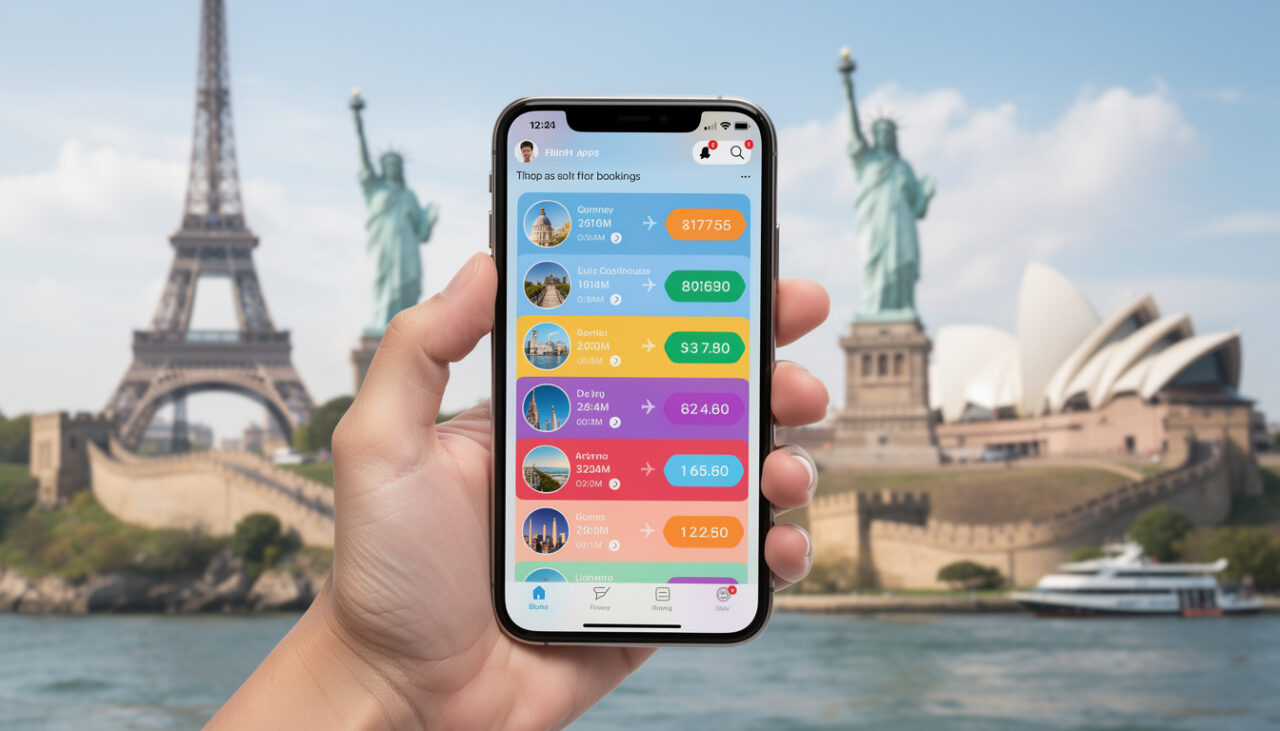
Booking long-haul trips has turned into a kind of digital treasure hunt. Travelers hop between tabs, chase disappearing fares, and watch ticket prices jump like stock charts. The right mix of travel booking apps, deal alerts, and flexible search tools can flip that story completely. With a smart setup, cheap flights to almost anywhere become something predictable, not just a lucky break. The landscape of global flight booking in 2026 is dominated by clever algorithms, hidden routing tricks, and sleek mobile dashboards that feel closer to gaming than old-school travel agencies.
What separates the best travel apps from the rest is how they let people think in terms of experiences instead of stress over every dollar. Weekend in a spa cabin in the Alps, wellness retreat in Bali, urban escape in Tokyo—each scenario becomes easier to reach when alerts are tuned, dates are flexible, and low-cost airlines are woven into every search. The most effective apps don’t just list prices; they encourage playful experimentation with dates, airports, and routes, so that affordable flights turn up where nobody expected them. For anyone who loves stylish hotels, boutique stays, and wellness-focused getaways, mastering these tools is like unlocking a permanent upgrade to life.
Key points about the best apps for cheap global flight bookings
- ✈️ Start broad with Google Flights on desktop for fast flight comparison, then move to mobile apps like Skyscanner, Kayak, Momondo, and Priceline to track and book cheap flights.
- 🌍 Use exploration features such as Skyscanner’s “Everywhere” or Kayak’s map search to uncover unexpected flight deals and destinations powered by low-cost airlines and flexible dates.
- 📱 Combine classic search apps with specialty tools like Skiplagged’s hidden-city tickets and Going’s email alerts to build a personal “stack” of best travel apps for any route.
- 💸 Maximize budget airfare by mixing apps with loyalty programs, off-peak travel, and last-minute promos like curated summer deals on stays and packages.
- 🧳 Rely on app extras—bag-measuring tools, offline trip boards, gate alerts—to keep global trips smooth from first tap to hotel check‑in.
Best Core Apps for Cheap Global Flight Bookings
When people talk about the “best apps for cheap global flight bookings,” most regular travelers quietly rely on a small inner circle: Google Flights on desktop, supported by Skyscanner, Kayak, Momondo, and Priceline on mobile. Together, they turn the usual guesswork of flight comparison into something closer to a method. Someone like Alex—a wellness-obsessed traveler bouncing from Scandinavian spas to Balinese yoga retreats—rarely books a ticket without moving through this sequence.
The pattern usually starts with Google Flights on a laptop. Google doesn’t offer a full app, but its browser interface is lightning-fast and able to combine up to seven departure and arrival airports at once. That means Alex can search London, Paris, and Brussels simultaneously when deciding on a European hub, or compare airports across Southeast Asia to reach a remote wellness resort. This broad, visual scan lays out the landscape of global flight booking: which days are cheapest, which airlines are undercutting rivals, and which routes avoid endless layovers.
Once a shortlist appears, the game moves to the phone. That’s where Skyscanner usually steps in. The Skyscanner app mirrors the full web tool, which is rare. By switching destination to “Everywhere,” Alex gets a ranked list of countries and cities by price—Berlin, Lisbon, Marrakech, Bangkok—often revealing destinations that weren’t even on the radar. A long weekend that was supposed to be in Spain can morph into a retreat in the Atlas Mountains if the app surfaces a flash sale.
Next comes Kayak. Its Explore map may feel slightly busier on a small screen, but the concept is powerful. Tap around a world map sprinkled with price tags, filter by themes like “Beaches” or “Family,” and watch clusters of discount flights pop up. For someone planning a detox weekend between work sprints, the map might show the same budget for either a Croatian coast escape or a Balearic Island spa, letting mood decide rather than price.
Momondo quietly plays the role of undercover agent. While the interface leans playful with purple hues, the engine dives into hundreds of smaller online travel agencies. This is often where one last, slightly cheaper budget airfare appears—a boutique OTA in another country discounting a fare nobody else highlighted. For Alex and many other travelers, this is where extra savings land that can be reallocated to a better hotel, a private hammam session, or an upgraded breakfast.
Priceline rounds out this core set with strong packaging. While it works well for stand‑alone flights, it becomes especially handy when combining cheap flights with discounted hotels and rental cars. Someone booking a long-haul to Europe for a wellness road trip might snag a low-cost transatlantic fare and bundle it with a mid-range design hotel near a trailhead, getting the whole curated experience locked in through one interface.
Used together, these apps create a multi-step system: scan the world with Google Flights, probe flexible destinations with Skyscanner and Kayak, dig for obscure OTAs with Momondo, and package everything via Priceline where it makes sense. That layered approach makes truly affordable flights feel less like a fluke and more like a repeatable ritual.
Once this toolkit is in place, the focus can shift away from stress about cost and toward the fun part: choosing which spa, cabin, or beachfront lounge chair those saved dollars will fund next.
Exploration Apps That Turn Cheap Flights Into Adventures
Core search engines handle the basics, but the apps that create real magic are the ones that encourage play. These tools turn cheap flights from simple discounts into unexpected adventures. Instead of “Where’s the cheapest ticket?”, the question becomes “Where could this budget produce the most joy?” That shift is where exploration-focused travel booking apps shine.
Skyscanner’s “Everywhere” function is the backbone here, but the app goes further with its “Explore” tab. Travel ideas appear grouped into themes such as “Solo Travel,” “Quick Getaways,” or “Last Minute.” For someone craving a wellness reset between busy projects, this might surface a mix of island escapes, mountain villages, and coastal cities, each paired with the lowest fares from their home airport. A Thursday night scroll can turn into a confirmed Friday departure when an irresistible price line meets an intriguing destination name.
Kayak contributes a different form of exploration via its map. Filters based on price ceilings, flight duration, and interests like beaches or golfing help shape a world that feels tailored. Maybe the budget is $250 and the time window is a three-day weekend; the map instantly fills with small dots across Europe: Porto, Nice, Split. When one of those dots hides a dreamy spa hotel or a boutique guesthouse, a cheap ticket transforms into a memorable reset.
Deals platforms outside pure flight search deepen this effect. Services like Going work behind the scenes, sending alerts when they find exceptional long-haul flight deals that undercut usual prices by $200–$500. A routine commute can be interrupted by an email: “Business-class to Seoul cheaper than regular economy.” For a traveler chasing both comfort and balance, that kind of upgrade means arriving ready to sink directly into a Korean jjimjilbang or rooftop yoga class, instead of recovering from a punishing night in a cramped seat.
The same principle extends beyond flights. After securing cheap tickets to the Alps, it makes sense to pair them with stays that fit the same spirit of value and wellbeing. Curated collections like these sustainable Alps cabins show how a modest flight budget can evolve into a mountain retreat with eco-conscious design, panoramic saunas, and starlit hot tubs. When airfares drop thanks to smart apps, accommodation can become the main event.
Exploration apps don’t just save money; they reshape how trips are imagined. Someone who always flew to the same beach out of habit might discover that, for the same price, a hot spring lodge in Eastern Europe or a coastal wellness resort in Portugal is right there, waiting. The thrill comes from seeing a familiar budget open doors to unfamiliar horizons.
There’s also a subtle psychological effect. Once travelers get used to seeing dozens of cheap routes on a single map or in a ranked list, their sense of what’s “far” changes. A 10‑hour flight to a yoga retreat in Asia starts to feel as accessible as a two‑hour hop to a nearby city, because the pricing barrier has fallen. Wellness weekends stop being local. The whole planet becomes a menu.
To keep all of this organized, smart explorers often build a simple routine:
- 🧭 Use an “Everywhere” or map view weekly to scan for new low-price corridors.
- 📨 Keep deal-alert services active on a few key home airports.
- 🏡 Match any standout fare with a shortlist of wellness stays or stylish hotels.
- 📆 Stay flexible with dates so that the best deals define timing, not the calendar.
Treating exploration apps as creative tools rather than just price calculators turns the hunt for cheap flights into an ongoing source of travel inspiration.
The next step is to move beyond standard searches altogether and tap into unconventional tricks for cutting ticket costs even more.
Hidden-City Tickets, Low-Cost Airlines and Other Advanced Cheap-Flight Tricks
Once the basics of flight comparison and flexible searches are in place, some travelers push into deeper territory: unconventional routes, hidden-city tickets, and clever combinations of low-cost airlines. These tactics aren’t for everyone, yet they can drop prices dramatically when used thoughtfully.
Skiplagged sits at the center of this world. Rather than only showing flights that officially end at your destination, it searches for routes where that city is merely a layover. A traveler might want to go from New York to Chicago; a traditional search shows nonstop fares around a certain price. Skiplagged adds flights from New York to Denver, Tulsa, or Kansas City that happen to connect in Chicago, often at lower cost. The traveler simply gets off at Chicago and ignores the final leg.
This “hidden-city” strategy comes with caveats. Checked bags won’t work, since they’ll continue to the ticketed endpoint. Roundtrips break if a leg is skipped, because airlines automatically cancel subsequent flights. Use it once in a while with light luggage, and savings can be significant; abuse it regularly under the same loyalty profile, and airlines may push back by wiping miles or closing accounts. The Skiplagged app at least makes the distinction obvious, labeling these itineraries clearly so there’s no confusion.
Alongside hidden-city tricks, the smart use of low-cost airlines multiplies options. Many global travelers now weave carriers like Ryanair, easyJet, AirAsia, or Southwest into journeys as if they were local buses. Rather than paying a single expensive full-service fare from home to a remote resort, Alex might book a major international hub on a traditional airline using miles, and then add a cheap local segment via a budget airline. The result is often a lower overall cost for the same—or better—experience.
Advanced users often compare these strategies side by side:
| Strategy ✈️ | Potential Savings 💰 | Best Use Case 🌍 | Risks ⚠️ |
|---|---|---|---|
| Hidden-city tickets (Skiplagged) | Up to 40% off standard fare | One-way trips with carry‑on only | Airline penalties, no checked bags |
| Low-cost airlines mix | 20–50% cheaper short-haul | Regional hops to remote retreats | Strict baggage rules, fewer perks |
| Hub-and-spoke DIY routes | Variable, often $150–$300 per trip | Connecting via big hubs for long-haul | Separate tickets, missed-connection risk |
Apps like Momondo and Kiwi.com are particularly handy for these advanced setups. Momondo’s mix-and-match option lets travelers stitch together one-way segments from multiple carriers, which can produce stark savings on complex routes. Kiwi pioneered “virtual interlining,” bundling separate airlines into a single manageable itinerary and sometimes offering connection protection on those DIY combinations.
For wellness-focused travelers, this opens doors to places that used to feel unreachable. Picture a journey from North America to a tiny village in the Dolomites. Rather than booking an expensive through-ticket, the route might involve a deal alert to Milan via a major airline, followed by a budget flight to a regional airport, and a scenic train ride into the mountains. The money saved goes into a private thermal spa treatment or an extended stay in a mountain lodge.
As long as travelers internalize the trade-offs—extra buffer time between separate tickets, strict carry‑on packing, and awareness of airline rules—these advanced tactics can unlock a level of discount flights that standard searches never show.
Once the flights are in place, attention naturally shifts toward making the whole trip feel cohesive: hotels, cabins, and retreat-style stays that match the same level of smart value.
Pairing Cheap Global Flights with Hotels, Cabins and Wellness Retreats
There’s a quiet joy in landing a rock-bottom fare and knowing the savings will flow straight into better stays and richer experiences. Cheap flights don’t exist in isolation; they’re the launchpad for cabins in the Alps, beachfront hideouts, or sleek city hotels with rooftop pools. The most satisfying global trips balance tactical flight savings with thoughtfully chosen accommodation.
One approach many frequent travelers use is to set a rough “experience-first” rule. Once a good budget airfare appears—thanks to Skyscanner, Kayak, or a Going alert—they lock it in and immediately look for places that feel restorative or inspiring. Some of the best case studies are mountain or nature getaways, where the contrast between the chaos of airports and the calm of arrival feels dramatic.
After scoring cheap flights into Zurich or Geneva, for example, travelers might browse curated stays like the sustainable Alps cabins mentioned earlier. These properties often blend eco-design, panoramic views, and spa-style elements like hot tubs or saunas. Because the flight cost has been sliced, it becomes easier to justify that extra night in a wood-fired hot tub under the stars or a massage overlooking pine forests.
Urban escapes benefit from the same tactic. A low-cost airline ticket to Lisbon, Athens, or Prague frees up budget to choose boutique hotels with wellness corners: infrared saunas in the basement, rooftop yoga sessions, or organic breakfasts on sunny terraces. Instead of compromising on location or ambience, flight savings shift the fulcrum of spending toward the stay itself.
Last-minute deals also play a significant role. When apps deliver last-minute flight deals, it pairs naturally with curated offers like dedicated last-minute summer deals on resorts and packages. A spontaneous notification about cheap flights to a Mediterranean hub can lead straight into a discounted wellness resort booking, creating the kind of short-notice vacation that used to feel financially risky but now feels smart.
To make this synergy between flights and stays work smoothly, travelers often follow a simple playbook:
- ✈️ Let cheap flights determine broad regions (e.g., “somewhere in the Alps” or “any Greek island”).
- 🏡 Use curated hotel and cabin sites aligned with wellness, sustainability, or design.
- 💆 Allocate the flight savings toward spa treatments, upgraded rooms, or extra nights.
- 🧾 Keep track of total trip cost in a note app to see how strategic booking shifts the balance.
This mindset reframes global flying. Instead of feeling like the expensive barrier to a trip, air travel becomes the discounted entry ticket that frees up resources for the actual reason most people travel: slow mornings, soft robes, mountain air, or warm sea water.
As more travelers adopt this approach, even traditional packages start to evolve. Some booking platforms now highlight combinations of low-fare routes with boutique wellness stays, knowing that a generation used to hunting for affordable flights wants comfort and atmosphere at the destination, not just a cheap seat on the plane.
With flights, stays, and experiences aligned, the last piece is staying organized and safe across different apps and tickets so that trips feel as effortless as they look in photos.
How to Build Your Personal Cheap-Flight System with Apps
Scoring occasional cheap flights feels good; building a personal system that delivers them repeatedly feels transformative. Frequent travelers often create a kind of “stack” of best travel apps, checklists, and habits that run almost on autopilot. Over time, the system keeps producing low fares while also reducing stress on the road.
Many start by dividing apps into functional categories: exploration, booking, alerts, and trip management. Skyscanner and Kayak handle exploration; Google Flights and Momondo excel at analysis and flight comparison; Priceline or airline apps finalize the booking; Going or similar services provide surprise alerts. Keeping two or three go‑to apps per category avoids overwhelm while still catching most useful flight deals.
Next, they embed key rules that guide every purchase. One common rule is the “24-hour cool-off”: after spotting an enticing fare, the traveler cross-checks on at least two other apps and, where possible, on the airline’s own app to confirm baggage policies and potential change flexibility. Another rule might be to avoid ultra-tight self-made connections on separate tickets, recognizing that a missed link between budget carriers can easily eat up the savings.
App safety and data hygiene play a quieter but vital role. Using secure connections, enabling two-factor authentication where available, and avoiding sensitive purchases on public Wi‑Fi keeps the savings from turning into headaches. Most mature flight apps now encrypt payment details and let users store loyalty IDs, passport data, and traveler profiles so bookings can be completed in a few taps.
Trip-management features elevate the experience from merely cheap to genuinely smooth. Kayak and Momondo both offer “Trips” areas where all reservations—flights, hotels, cars—are stored in a neat timeline, accessible even offline. Gate-change notifications, boarding reminders, and real-time delay updates mean fewer frantic dashes through unfamiliar terminals. Bag-measuring tools that use a phone camera can prevent surprise fees at low-cost airline check-in desks, safeguarding the value of those discount flights right up to boarding.
For travelers who often chase wellness retreats, there’s value in syncing this system with lifestyle choices. Alerts can be set around quieter months for a favorite region: early spring in the Alps, late autumn in Japan, shoulder season in the Mediterranean. When those alerts line up with cheap flights, the result is a string of restorative escapes spread throughout the year instead of a single, exhausting “big trip.”
Over time, a well-tuned system looks something like this:
- 📆 Weekly scan on Skyscanner or Kayak Explore to spot emerging cheap corridors.
- 📨 Ongoing email alerts from services specializing in exceptional long-haul deals.
- 📲 Two or three trusted booking apps with stored profiles, ready for fast checkout.
- 🧳 One or two trip-management apps keeping all boarding passes, gates, and times synchronized.
- 💳 A travel rewards card strategy that quietly adds miles or points to each cheap ticket.
When all these pieces work together, global flight booking stops feeling like a battle against fluctuating prices and starts to resemble a well-rehearsed ritual. Each new notification, route, or low fare is a possible doorway to the next spa terrace, mountain cabin, or hotel lobby that feels like a second home.
That kind of system turns cheap flights from a lucky accident into a lifestyle—one where the distance between daily routine and a distant, restorative horizon is just a handful of taps away.