Budget Tips for Family Vacations in Greece
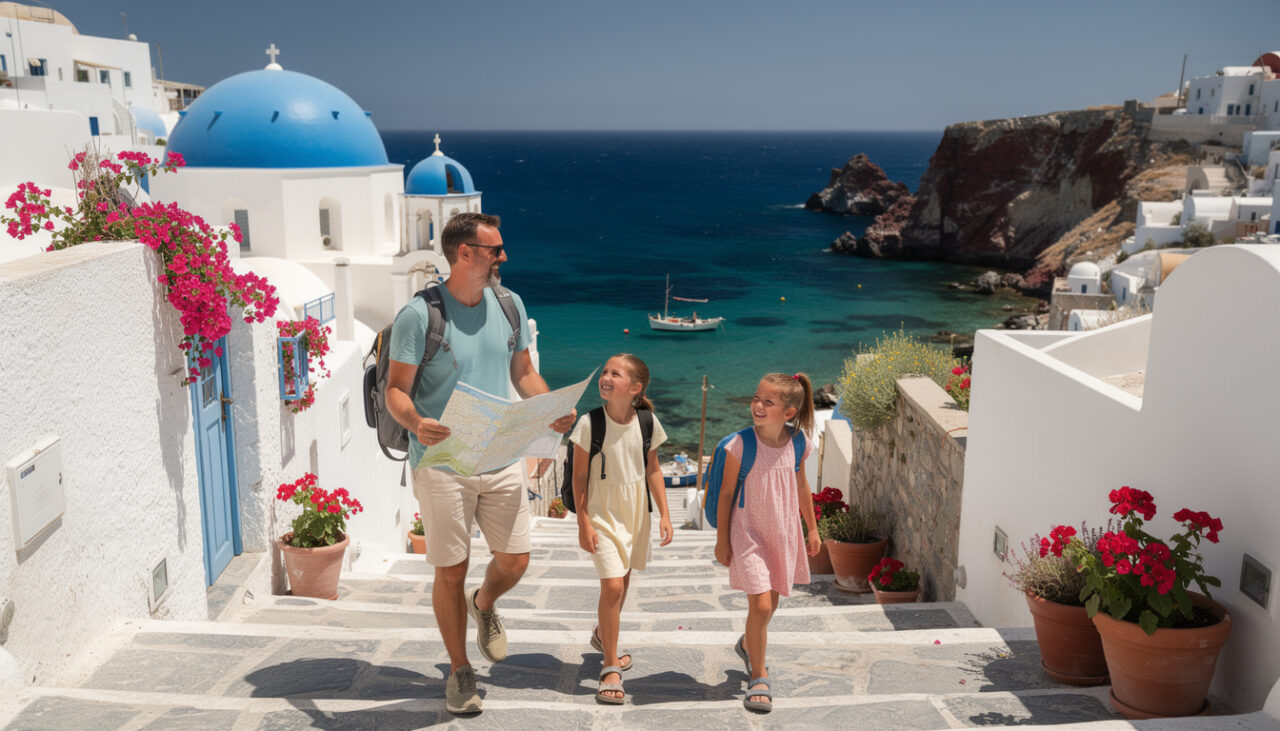
Sun-bleached alleys, crumbling temples glowing in the late-afternoon light, kids chasing waves while grandparents linger over grilled octopus and chilled lemonade – family vacations in Greece have a way of stealing hearts long after suitcases are unpacked. The good news for parents planning Greece travel is that this dream doesn’t have to come with celebrity-island price tags. With smart vacation planning, a flexible mindset, and a few local tricks, Greece on a budget becomes not just possible, but genuinely fun. From choosing lesser-known islands that still deliver turquoise water, to riding slow ferries that turn travel days into mini-cruises, there are countless ways of saving money without cutting out the magic. Budget travel here is less about sacrifice and more about traveling like Greek families do: lingering over shared plates, embracing public transport, and picking accommodations where kids are welcomed by name. 🌊🇬🇷
Key points about budget tips for family vacations in Greece
- 🧭 Choose off-peak months (April–June, late September–October) and less-hyped islands to unlock truly affordable trips without crowds.
- 🏡 Mix budget accommodation like family-run guesthouses and apartments with occasional splurge nights for a balanced Greece travel experience.
- 🍽️ Eat like locals: bakeries, street food, and neighborhood tavernas keep family vacations delicious and low-cost.
- 🚌 Use KTEL buses, metro passes, and slow ferries to move around Greece on a budget while kids enjoy the journey as part of the adventure.
- 🏛️ Lean on free beaches, discounted museum days, and combo passes to fill days with culture and nature without draining the wallet.
- 📱 Combine cheap flight tools, smart SIM choices, and reusable bottles to keep hidden costs from nibbling away at your budget travel plans.
Choosing Where and When: Smart Destination & Timing Tips for Greece on a Budget
Families often start their Greece travel plans by typing “Santorini family hotel” into a search bar and then quietly closing the laptop when the prices appear. The trick is shifting the mental map a little. Swap A-list islands like Santorini and Mykonos for places Greek families actually frequent: Naxos, Paros, Andros, Tinos, or the wide-open shores of the Peloponnese peninsula. These spots still serve the same blue water, white churches, and grilled fish, just without the inflated bills and selfie-stick crowds. 🌅
Consider the story of a four-person family from Dublin who set their sights on Naxos instead of Santorini. They scored a family room in a small pension for under what a single cave suite would cost on the caldera. Their “backyard” became a shallow, sandy beach where the kids built sand fortresses every evening, and the parents could sit at a nearby kafeneio watching the sky turn peach and lilac. That’s the quiet power of choosing destinations that value families over fashion spreads.
Timing plays a huge role too. July and August bring searing heat, packed ferries, and price hikes on almost every line of the travel budget. Sliding a trip into late May, early June, or late September transforms the entire equation. Accommodation rates soften, beach umbrellas empty out, and taverna owners have time to share stories with curious kids about ancient heroes or village legends. Shoulder season sunlight is gentle enough for little ones, and sea temperatures are still welcoming.
Winter, from November to March, opens another angle for truly affordable trips. Many small islands quiet down, but mainland regions like Central Greece, the Peloponnese, and big islands such as Crete and Rhodes keep humming thanks to permanent residents. Families who enjoy hiking, mythology, and hearty comfort food rather than long beach days can base themselves in a city like Nafplio or Thessaloniki. They might swap afternoons at waterparks for wandering archaeological sites and sipping hot chocolate in cozy cafes, but the trade-off also includes halved hotel prices and almost empty must-see ruins.
Transport choices affect the budget just as much as dates and places. Families flying from abroad can trim hundreds of euros by staying flexible with airports. Checking both direct flights to islands and connections via Athens using comparison tools or guides like apps that track cheap global flights ✈️ helps pinpoint sweet spots before school breaks lock in. Flying midweek, especially Tuesdays and Wednesdays, still tends to be kinder to the wallet.
Slow ferries are another undervalued secret. High-speed catamarans shorten journeys but stretch budgets, especially when multiplying ticket costs by four or five. Standard ferries can take longer yet offer open decks, cafeterias, and space for kids to roam safely under watchful eyes. These floating playgrounds turn travel time into part of the holiday, and the savings across several crossings can easily pay for an extra night by the sea.
Families from outside Europe can also explore Eurail options that include certain Greek domestic ferry lines, while EU families look at Interrail equivalents. For those combining Italy and Greece, passes that include the overnight Superfast ferry between the two countries keep an entire layer of costs predictable and pre-paid, something parents love when planning with tight budgets and tight schedules.
By aligning destination, season, and transport style, families unlock a version of Greece on a budget that still feels indulgent: quieter beaches, warmer connections with locals, and less clock-watching anxiety. That’s the foundation every other money-saving decision can rest on.
Budget Accommodation Ideas: Family-Friendly Stays Without Luxury Prices
A Greek holiday often starts to feel costly the moment parents search for two connecting rooms in a resort. Yet the country is full of smaller, family-run places that genuinely enjoy hosting kids and grandkids, and those are the properties where budget accommodation turns into an unforgettable memory rather than a compromise. 🏡
Guesthouses and traditional pensions are the heart of this approach. In many seaside towns, a short walk away from the main waterfront strips, balconies are festooned with bougainvillea and laundry rather than branded signage. These homes-turned-hotels usually offer simple, clean rooms, sometimes with a kitchenette or shared terrace where children can sprawl with coloring books while parents sip a late-night ouzo. Hosts often throw in breakfast – fresh bread, yogurt, honey, maybe a slice of homemade cake – that quietly saves a solid chunk of daily food costs.
Take the fictional example of the Karalis family booking a week in Nafplio. Instead of a central boutique hotel at €250 a night, they chose a small, older property tucked in a quieter street. The room wasn’t magazine-ready, yet the host produced extra blankets, a kettle, and even toys her grandchildren had outgrown. By the end of the week, the kids were delivering thank-you drawings, and their parents had saved enough to add a day trip to the ancient theater of Epidaurus.
City stays need a slightly different strategy. In Athens, Plaka and the streets nearest the Acropolis draw most first-timers, which naturally pushes prices skyward. Families willing to stay in neighborhoods like Pangrati, Mets, or Koukaki can reach the Parthenon in a short metro ride or scenic walk, but pay noticeably less at night. The same pattern holds in Rhodes, where new town lodgings remain within walking distance of the medieval Old Town but avoid its premium pricing.
For larger families or multi-generational trips, apartments and small villas deliver extraordinary value. A two-bedroom flat with a kitchen, washing machine, and balcony often costs less than two mid-range hotel rooms. Self-catering breakfasts, simple pasta nights, and the ability to refrigerate snacks reduce daily expenses and food waste. Everyone gets space to decompress, and parents can enjoy a glass of wine on the balcony while kids fall asleep in another room – a priceless luxury when sharing a single hotel room starts to feel cramped.
To make smart comparisons between flights, accommodation styles, and locations, some families browse not only Greek deals but also broader travel resources. Articles like this review of budget airlines in Europe can help predict which carriers treat luggage, strollers, and route changes more gently – valuable knowledge when shuttling kids across continents.
Hostels, too, have evolved. Many Greek hostels now feature family rooms with private bathrooms, game corners, and shared kitchens. They attract a mix of young backpackers and families who appreciate the sociable vibe and lower prices. Parents traveling with teens often find this hybrid setting ideal: kids gain independence meeting other travelers, while adults still sleep just a door away.
To keep all these options clear at a glance, consider a snapshot of typical daily costs for budget-conscious Greece travel:
| Item 🧾 | Typical Budget Price (EUR) 💶 | Family-Friendly Tip 👨👩👧👦 |
|---|---|---|
| Hostel bed in major city | €25–65 per person | Book a family room to keep everyone together and save on multiple dorm beds 😊 |
| Family-run hotel double room | From €95 per night | Look for stays that include breakfast and welcome kids with extra beds or cots 🛏️ |
| Taverna dinner for two adults | From €30 | Share plates and add low-cost kid favorites like fries and salads 🥗 |
| Street food (gyro or souvlaki) | €3–5 | Perfect for quick, filling family lunches on the go 🌯 |
| Metro day pass in Athens | Approx. €4–5 | Grab passes for adults and older kids to explore all day without tracking single tickets 🚇 |
Whatever lodging style a family chooses, distance matters. Being one metro stop away from the action usually costs less than being in the middle of it, and younger children tire quickly in summer heat. A practical test: if a stroller can roll from your front door to a shaded square or playground within ten minutes, the location probably works. Affordable doesn’t mean isolated; it means matching convenience with character and cost.
With the base camp chosen wisely, families can pivot towards one of Greece’s biggest joys: food.
Eating Well on a Budget: Street Food, Bakeries, and Family Taverns
Many parents secretly fear that restaurant bills will devour their careful budget travel calculations. Greece softens that blow with its generous tradition of sharing. Large plates, family-style dishes, and cheap, tasty snacks mean that kids can eat well without parents scanning the right-hand side of the menu in panic. 🍽️
Street food is the happiest starting point. Pita gyros and souvlaki, usually priced between €3 and €5, are filling enough to power a morning of sightseeing. Wrapped in warm bread with tomato, onion, fries, and tzatziki, they become instant crowd-pleasers for kids who might be wary of unfamiliar dishes. Parents can order one extra portion and divide it between younger children, cutting waste and spending at the same time.
Greek bakeries quietly rescue families day after day. Tiropita (cheese pies) and spanakopita (spinach and cheese pies) often cost around €1.50–€2 and can stand in for breakfast, a mid-morning snack, or a light dinner with a salad. In Thessaloniki, koulouri – thin sesame rings of bread – still hover around €1 and keep little hands busy as parents navigate bus tickets or directions. In Crete and northern cities, bougatsa, a flaky custard pie, feels like a treat that somehow counts as breakfast and dessert at once.
Tavernas become the stage for long, slow meals that families remember years later. The budget trick here is ordering like locals: plenty of shared starters (meze) and a smaller number of mains. A table might fill with plates of grilled vegetables, tzatziki, fried zucchini, saganaki cheese, and a big horiatiki salad glistening with olive oil. Kids can pick and choose what they like while adults savor everything. A single moussaka or grilled fish can be split, especially when paired with sides, reducing both portions and prices.
Neighborhood choice matters. Greece’s waterfront promenades and main squares naturally attract higher prices. By walking just a couple of blocks inland, families often find tavernas where Greek conversations drown out English, and bills shrink. Locals are usually delighted to recommend their own favorites; asking the staff at a guesthouse or the barista who makes your morning coffee often leads straight to the kind of place where kids are greeted with a smile and maybe a free slice of watermelon at the end. 🍉
Water is another subtle budget lever. Ordering bottled water at every meal adds up fast, and single-use plastic piles disturb many visitors once they see bin after bin of empty bottles. On many islands and across most of the mainland, tap water is drinkable, though habits vary. A good approach is carrying a sturdy filter bottle for peace of mind and filling it where possible. Buying a large shared bottle at a supermarket and refilling reusable bottles through the day costs far less than repeatedly buying small ones in tourist kiosks.
Families also discover that supermarkets and fresh markets open doors to budget-friendly picnics. A basket of cherry tomatoes, cucumbers, olives, local cheese, and a loaf of crusty bread can turn any shady square or seaside bench into a feast. Kids get to help choose the food and assemble their own plates, transforming mealtime into a game rather than a negotiation about restaurant behavior.
For parents who love weaving other destinations into longer trips, comparing food prices and habits can be unexpectedly useful. Resources created for places like Central Europe, such as a guide about reasons to visit Poland now, often highlight similar strategies: eat where locals do, prize bakeries, and explore markets. The principles carry smoothly into Greek vacations and reinforce the idea that affordable trips rest less on deprivation and more on eating with the rhythm of each country.
Of course, families might want to splurge once or twice, perhaps on a seafood feast by the harbor or a sunset-view restaurant. Budget travel doesn’t forbid treats; it simply means that many lunches are simple, delicious, and cheap so that the special night feels truly special rather than routine.
By treating Greek food as both nourishment and adventure, parents can keep everyone happily fed without losing track of costs – and kids may even return home with a new favorite dish that doesn’t come from a kids’ menu.
Getting Around and Staying Connected: Transport & Everyday Savings for Families
Moving a family across a country with islands, mountains, and ancient cities can sound complicated, yet Greece rewards those who slow down and use its existing networks. Transport and connectivity are the quiet background costs that decide whether a trip stays on budget or drifts off course, so treating them as part of the adventure itself pays off. 🚌
The KTEL bus system threads through the mainland and larger islands, connecting Athens with destinations like Nafplio, Delphi, and Patras. Tickets such as Athens–Nafplio for around €13–€14 per adult make these buses far cheaper than renting a car for every leg, especially when kids travel at reduced fares. Modern buses usually offer air-conditioning and luggage storage, and scheduled breaks provide space for snack runs and stretching. Parents can relax rather than cling to a steering wheel on unknown roads.
Inside cities, metros beat taxis for both price and predictability. In Athens, a 24-hour ticket costing under €10 unlocks unlimited rides, turning metro maps into treasure hunts for older kids. The dedicated 3-day tourist pass, which includes one return trip to or from the airport, makes arrival days less stressful: no negotiating with taxi drivers while juggling strollers and backpacks. Children often love the novelty of riding underground or emerging directly in front of landmarks like the Acropolis or Monastiraki Square.
Ferries knit the islands together like a floating train network. Choosing regular ferries over fast ones not only drops ticket prices but also adds extra layers of experience. Families can claim a corner table on deck, spread out snacks, and watch dolphins race the ship’s bow. Parents who have spent long-haul flights trapped in narrow seats often comment that these slow crossings feel like a reward, not a chore. For those planning multiple islands, checking sites such as Ferryhopper ahead of time helps compare routes and schedules without unwelcome surprises.
Some families still prefer the flexibility of a car, especially with toddlers and gear. Here, timing is everything. Low-season rentals can fall to half their summer highs, and picking up cars in secondary locations, rather than straight at the airport, occasionally trims prices further. Sharing a car between two families traveling together can be far cheaper than booking duplicate vehicles, and splitting fuel and tolls keeps costs predictable. Car seats are usually available from rental agencies, but confirming in advance prevents awkward last-minute dashes.
Everyday digital life also deserves a line in the budget spreadsheet. Roaming fees from home providers can escalate quickly when maps, messaging apps, and social videos all compete for data. Buying a local prepaid SIM from one of Greece’s main networks – Cosmote, Vodafone, or Nova – often melts that worry away. A modest data package easily covers navigation, restaurant lookups, and keeping grandparents updated with beach photos. Teens can stream music for those long ferry rides without parents fearing the next bill.
Flight costs require another layer of strategy. While many families rely on a single favorite airline, tracking prices across different carriers opens extra room for saving money. Websites that specialize in comparing low-cost carriers, such as a broader roundup of last-minute summer flight deals, help parents decide whether shifting dates by a day or two unlocks big discounts or whether a nearby departure airport makes more sense.
Beyond transport and connectivity, there are small, easy changes that compound nicely:
- 💧 Carry a reusable bottle with a filter so family members aren’t constantly buying plastic water.
- 📍 Download offline maps of key regions before departure so navigation doesn’t depend on constant data.
- 🎟️ Check cultural ministry websites for free museum days and admission discounts for EU students or seniors.
- 📚 Save key booking confirmations and boarding passes offline as PDFs so poor reception never becomes a crisis.
- 🧴 Pack sunscreen and basic pharmacy items from home, as resort areas often mark up essentials heavily.
Greece even offers a digital helper: Discover Greece hosts “Pythia,” an AI assistant that answers basic travel questions. While it won’t replace detailed planning, a quick query can nudge families toward lesser-known beaches or affordable events in their chosen region.
When transport, connectivity, and those everyday details are handled smartly, parents gain mental bandwidth. They spend fewer moments crunching costs mid-trip and more time watching children chase pigeons through a sunlit square or gasp at their first glimpse of the Parthenon.
Free and Low-Cost Family Activities: Beaches, Culture, and Everyday Greek Life
One of the secret advantages of family vacations in Greece is how much joy comes from things that cost nothing at all. The country is practically designed for days where the wallet stays in the bag: water, sky, stone, and story come together in ways that keep kids and adults entranced without expensive tickets. 🌞
Start with beaches. Public access remains the norm, and while sunbeds and umbrellas can cost around €5–€12 per set, families can always claim free spots with their own towels and a lightweight beach tent. Shallow, sandy stretches such as those found in Naxos, Halkidiki, or parts of the Peloponnese are natural playgrounds where children drift between sandcastle engineering and splash battles. Parents often report that the simplest days – a bag of snacks, a ball, and a stretch of sand – end up as the ones kids talk about longest.
City wandering costs little more than a pair of comfortable shoes. In Athens, neighborhoods like Plaka, Anafiotika, and Psyrri offer lanes full of cats, street art, and hidden courtyards. Teens can hunt for the quirkiest murals while younger siblings count stray cats or search for the grandest orange tree. Public squares become living rooms: Syntagma, Monastiraki, and Thessaloniki’s Aristotelous Square fill with buskers, balloon vendors, and people simply watching the world go by.
Historical sites, of course, carry ticket prices, yet even these can sync well with budget travel. Greece offers free entry days to many state-run museums and archaeological zones, often the first Sunday of the month in the cooler seasons. Planning key sightseeing around those days – for example, scheduling the National Archaeological Museum for a free Sunday – can carve dozens of euros off the family budget. Over-65 visitors and EU students receive substantial discounts, which mixed-age families can combine with family tickets to bring costs further down.
Some regions go a step beyond with combination passes. Kalavryta, in the northern Peloponnese, has offered a city pass covering attractions like the Cave of the Lakes and the historic Odontotos Railway. For an adventurous family, one such pass folds an entire day of exploring nature and history into a single predictable price. Multiplying this logic across a week’s itinerary – one day focused on a pass, another on a free museum, another on open-air ruins – keeps both curiosity and finances in balance.
Markets provide a second layer of free entertainment with optional, low-cost purchases. Central Athens’ Varvakios Market smells of herbs, grilled meat, and the salty tang of fresh fish. Children marvel at octopus tentacles and piles of glistening olives, while parents pick up enough fruit and cheese to assemble a picnic. Neighborhood laiki (weekly street markets) in towns and cities around the country feel more local still, with vendors joking in Greek and kids given the occasional free strawberry or fig as a treat.
For families who like structured adventures, hiking in Greece offers views that would cost a small fortune if replicated in a theme park. Trails near Mount Olympus, Zagori, or the Samaria Gorge entrance in Crete bring panoramas of gorges, forests, and distant seas. Many routes are suitable for older children with good shoes and supervision. Parents can tailor hikes to attention spans: a short woodland walk ending at a river for rock-skipping beats a grueling all-day trek with tired, cranky kids.
Sometimes, the richest experiences come from simply saying yes to everyday Greek life. A small-town panigyri – a religious or village festival – might feature live music, dancing, and shared meals where visitors are welcomed like long-lost cousins. Church courtyards on Sunday mornings, local football matches in the evening, or open-air cinema nights in summer all cost very little, yet they give kids firsthand examples of how Greek communities celebrate, argue, and laugh together.
YouTube has become a handy tool for scouting these experiences in advance. Searching for “family travel Greece on a budget” surfaces honest vlogs from parents who walked the same paths. A quick scan through a video playlist like this can help families visualize ferry cabins, see what portions look like at typical tavernas, or gauge whether certain hikes feel right for their children’s ages.
By piecing together beaches, markets, free museum days, short hikes, and spontaneous neighborhood discoveries, parents design days that are rich in story yet light on spending. The pattern that emerges is simple: the best Greek memories rarely match the postcard shots exactly, but they fit perfectly into the family photo album.
Advanced Budget Travel Strategies: Safety, Tech, and Thoughtful Spending
Once the backbone of flights, stays, food, and activities is in place, families can refine their Greece travel plans with smaller strategies that quietly safeguard both budget and wellbeing. These aren’t flashy hacks; they’re the habits that separate stressful trips from smooth ones. 🧠
Travel insurance sits at the top of that list. Parents sometimes hesitate, seeing it as an optional expense, yet anyone who has visited a Greek clinic after a twisted ankle on cobblestones or a bad sunburn knows how much stress it removes. A reliable policy covering medical care, lost luggage, and cancellations acts like a safety net beneath every other decision. Spending a little here prevents a medical bill from devouring the whole budget.
Tipping and money manners shape both the travel budget and the memories left behind. Greek hospitality – filoxenia – is legendary, rooted in a belief that guests carry a bit of the divine. Most visitors encounter this in the form of unsolicited extras: a free dessert, an extra bowl of fries for hungry kids, or a round of tiny glasses of liqueur. While tipping isn’t as rigidly codified as in some countries, rounding up the bill or leaving a small percentage for good service recognizes the effort behind those gestures. Bargaining aggressively over a few euros might look like good saving money on paper, but it risks souring interactions that could have become vacation highlights.
Clever tech choices keep budgets under control without forcing constant mental arithmetic. Families can set daily or weekly spending targets using budgeting apps, categorizing costs into accommodations, food, activities, and transport. Reviewing these figures once every couple of days, perhaps during siesta time, replaces vague anxiety with clear information. If restaurant spending runs high, the next two days can lean on picnics and bakery breakfasts without any drama.
For older kids or teens, giving each child a small prepaid card or set allowance in euros turns budgeting into a learning experience. They get to decide whether that third gelato is worth it, or whether they’d rather pool funds to buy a shared souvenir later. Parents often notice that once kids manage their own “fun money,” pester power decreases significantly, replaced by more thoughtful choices.
Families blending Greece with other destinations or longer sabbaticals can take further cues from resources on solo trips, group travel, or remote-work journeys. Articles built for independent travelers, such as advice on how to turn solo travel into new friendships, regularly highlight staying flexible, picking social accommodations, and using tech wisely – principles that scale surprisingly well to multi-generational vacations too.
Environmental awareness also intersects neatly with budget travel. Choosing tap water where safe, carrying reusable cutlery, or favoring tavernas that use seasonal, local ingredients all reduce waste while often costing less. Families staying in self-catering apartments in particular can shop once at a local market, cook in batches, and carry leftovers in reusable containers on day trips, steering clear of overpriced snack stalls.
When fatigue hits, parents sometimes fall back on expensive quick fixes: ordering room service, hailing an overpriced taxi from the beach, or picking the first tourist restaurant with English menus and high markups. Recognizing this pattern in advance allows families to plan buffer days with no major sightseeing, just simple pleasures like local playgrounds, gentle swims, or board games in the shade. A slower rhythm wears kids out less and protects the budget from impulse decisions driven by exhaustion.
To keep planning stress low right up to departure, many families build a basic “trip bible” – a digital or printed collection of reservations, key addresses, backup plans for rainy days, and a shortlist of emergency contacts. Having an alternative already thought through if ferries are delayed or a museum closes unexpectedly keeps everyone relaxed. When kids see adults adapting calmly, they learn that flexibility is part of the adventure, not a crisis.
All these strategies share one idea: thoughtful spending amplifies, rather than diminishes, the experience. Parents who arrive home with both enough money left and stories of kind restaurant owners, ferry sunsets, and spontaneous street festivals know they’ve found the sweet spot. Greece rewards this blend of planning and openness again and again, especially for families ready to travel slow, ask questions, and see each day as a chance to connect rather than consume.
By layering safety, tech-savvy moves, and respectful spending on top of destination and timing choices, family vacations in Greece become more than just affordable trips. They turn into shared stories of resourcefulness, curiosity, and connection that kids carry well beyond the last scoop of pistachio gelato. 🍨