Adventure Sports in South Africa: Safaris and More
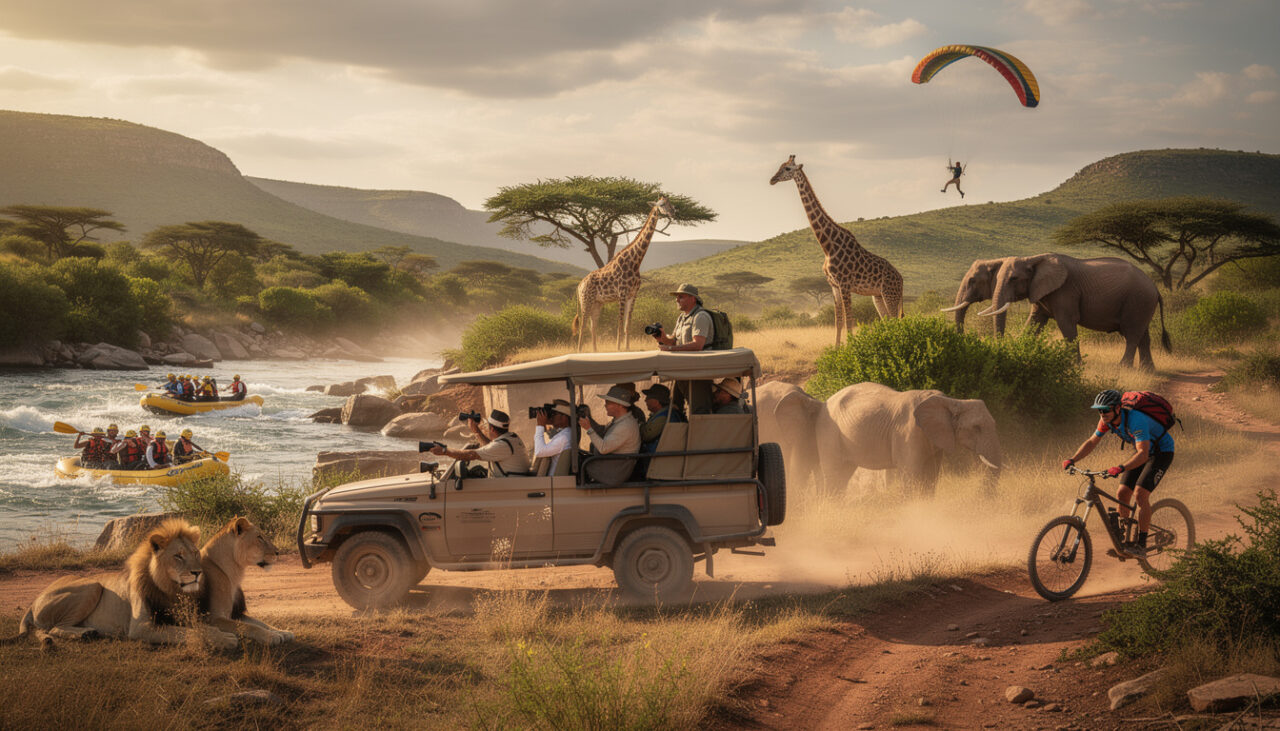
South Africa has a way of rewiring the senses. One day the horizon is a line of Big Five silhouettes on a dusty savanna; the next, it is a wall of turquoise water folding over a surfer in Jeffrey’s Bay or a granite cliff dropping into the Drakensberg valleys. Adventure sports in this country are not add-ons to a holiday. They are the language through which the land speaks. From shark cage diving with the great whites off Gansbaai to bungee jumping from the legendary Bloukrans Bridge, every experience carries a rush of adrenaline and a quiet undercurrent of connection. Safaris shift from passive game drives to walking trails where every footprint matters, and mountain biking singletracks wind through vineyards, fynbos, and forest. This is a destination where skydiving, white water rafting, and high-end wildlife tours share the same travel diary as spa decks and sundowner terraces, proving that wild adventure and deep comfort can sit side by side. 🧭
Key points about adventure sports in South Africa
- 🦁 South Africa blends adventure sports with world-class safaris, letting travellers move from game drives to bungee jumping and shark cage diving in a single trip.
- 🌊 The coastline delivers heart-pounding thrills like shark cage diving, surfing, sea kayaking, and coastal hiking, especially along the Garden Route and around Cape Town.
- ⛰️ Inland, the Drakensberg and Highveld turn into playgrounds for hiking, mountain biking, rock climbing, zip-lines, and white water rafting on rivers like the Orange.
- 🪂 Sky-high experiences such as paragliding and skydiving reveal South Africa’s cities, winelands, and coasts from a new angle, often paired with stylish lodges and wellness stays.
- 🤝 Local guides and eco-focused operators shape ethical wildlife tours, walking safaris, and marine adventures that support conservation and communities.
- ✈️ The article maps out sample itineraries, safety tips, seasonal advice, and ways for solo travellers, couples, and groups to stitch these thrills into one seamless South African journey.
Big Five Safaris and Beyond: Wildlife Adventures Supercharged with Sport
Adventure sports in South Africa start where the classic safari ends. Game drives at dawn remain iconic, yet more travellers are trading the vehicle’s comfort for the intensity of walking safaris, trail runs, and paddling expeditions along hippo-lined rivers. The country’s oldest private reserves learned long ago that adrenaline can sharpen the way guests see the bush, and by 2026 a new wave of lodges has perfected that blend of comfort and challenge. A story often told by rangers features a group of friends who arrived expecting only luxury; by the third day they were tracking rhino on foot, their senses dialed to every rustle in the grass, and declared that no game drive could ever feel the same again.
Traditional wildlife tours still have their place. Late-afternoon drives in open 4x4s, big lenses pointed at lion prides, remain a highlight. Yet properties in Greater Kruger, Madikwe, and the Eastern Cape increasingly structure days like multi-sport adventures. Morning might mean a brisk hike up a koppie with a ranger, learning to read the landscape through spoor and birdsong. After brunch, guests swap boots for bikes and roll out on guided mountain biking routes that weave between acacia trees, carefully planned to avoid sensitive breeding areas. The effect is subtle but powerful: wildlife is no longer scenery; it becomes a living, breathing context for physical effort and personal challenge.
For many couples, particularly those who could just as easily have booked easy last-minute summer deals somewhere in Europe, choosing a South African safari is about shared milestones. Instead of roses and candlelight clichés, their version of romance might be a calm hand squeeze when fresh lion tracks cross the walking path, or a laugh shared after a clumsy dismount from a fat bike in soft sand. Lodges have caught on. Valentine’s “packages” in the bush now pair sunrise trail runs, yoga decks overlooking waterholes, and night drives under a sky so bright it can unsettle city dwellers used to neon instead of starlight. 💫
Groups of colleagues and friends find that the bush is a powerful leveller. Stories circulate of corporate teams arriving in crisply ironed shirts for a two-day conference and ending up muddy, grinning, and exhausted after a GPS-based scavenger hunt that combines tracking skills, short trail segments, and paddling across small dams. It is outdoor team-building without the forced cheer. As one ranger likes to tell newcomers while tightening helmet straps: “This place will give your comfort zone a gentle nudge, not a shove off a cliff.” That said, those craving cliffs need only keep reading; the Bloukrans bungee is never far away.
To anchor all of this, responsible operators have refined a quiet art: turning raw nature into a sequence of “micro-adventures” that anyone can attempt. Nervous guests start with soft activities—maybe an easy river paddle or a short bush walk near camp—before graduating to longer hiking routes or overnight sleep-outs in tree platforms. Confidence grows with each step. Children skip between term-time routines and school holiday adventures where they learn to identify tracks before they can name half the brands in the city mall. Step by step, safari regions across South Africa prove that the wild is not something watched from a distance but a place to move through, breathlessly and respectfully. That shift sets the stage for the wilder coastal thrills.
From Game Drive to Active Safari: A Day in the Bush
Consider a fictional yet very plausible day at a modern lodge near Kruger. Dawn starts with coffee on the deck as impala drift through the mist. Instead of jumping straight into a vehicle, guests join a short, guided walk along the riverbank. The ranger stops to show where elephants chewed bark in the night, where a leopard dragged an impala up a tree, and where fresh hippo tracks cut through mud like signatures. The pace is slow, yet hearts beat faster because bodies are inside the story, not observing it from a metal frame.
Late morning, after breakfast, the lodge’s small adventure centre opens like a toy box for adults: kayaks stacked under thatch, trail maps pinned to a wooden board, and a rack of mountain bikes ready for the next ride. Guests choose between a gentle pedal along a jeep track or a more technical singletrack weaving around granite outcrops. The guide’s job is less about pushing harder, more about reading the group’s energy. That flexibility has helped safari destinations compete with beach resorts worldwide, including those tempting offers pushing travellers to visit Poland now or chase other short-haul deals. Once someone has pedalled past a zebra herd, it is hard to settle for an ordinary poolside break again.
By the time evening rolls around, the classic game drive feels like a reward rather than the main event. Muscles pleasantly tired, guests lean back as the vehicle rolls out. A herd of elephants crosses the track, and the ranger points to the ridge they hiked that morning. The view is no longer an abstract backdrop; it carries the echo of footsteps and the rhythm of breathing. That is the quiet genius of South Africa’s wildlife regions in the age of adventure sports: they take familiar icons—the lion, the sunset, the acacia silhouette—and thread them through lived physical experiences that stick long after tan lines fade.
Coastal Thrills: Shark Cage Diving, Surfing, and Ocean Safaris
South Africa’s coastline feels designed by a storyteller with a dramatic streak. On one stretch, calm bays cradle pods of dolphins; a few hours’ drive away, rocky points funnel heavy swells that attract world-class surfers. The ocean has become a stage for some of the planet’s boldest adventure sports, with shark cage diving near Gansbaai, sea kayaking around sea cliffs, and boat-based wildlife tours that track whales, seals, and rare seabirds. Locals will tell you that the line between fear and fascination is thinner here than anywhere else on the continent. 🦈
The most talked-about experience remains stepping into a steel cage tethered to a boat as great white sharks glide past. Operators working the channels around Dyer Island have evolved beyond thrill-for-thrill’s-sake. Briefings now go deep into shark biology, conservation challenges, and the complex relationship between humans and apex predators. That shift reflects two decades of marine science and tourism learning from one another. Guests are told exactly how chum is used, why sightings fluctuate, and what research is underway. The fear still tingles, yet it sits alongside a surprising respect. People surface from the cage less inclined to call sharks “monsters” and more likely to ask how to help protect them.
On calmer days, the same coastline hosts gentler adventures. Stand-up paddleboarders cruise near kelp forests while sea kayaks slip beneath cormorant-covered cliffs. Offshore, fast RIBs head out on marine safaris, scanning for humpback and southern right whales on their migratory routes. Guides share local folklore, such as tales of fishermen reading weather by the behaviour of gannets, or stories of 2000s-era pioneers who first brought structured whale-watching tourism to these communities. The coast’s rhythm—big sets of waves, long periods of quiet, late-afternoon wind—sets the tempo for adventure days.
Farther east along the Garden Route, Jeffrey’s Bay continues to pull surfers like a tide. “Supertubes” remains the name that lights up surfers’ faces, a long, right-hand point break that has earned near-mythical status. Pros chase those racing walls of water, yet the town also nurtures beginners with sheltered beaches, surf schools, and soft-top boards stacked in rental racks. A typical holiday here slides between early-morning surf sessions, lazy café stops, and road trips to nearby forest zip-lines or short coastal hikes in the surrounding reserves. The sea is the anchor, but the menu of adventure sports keeps restless travellers perpetually tempted.
From Cage to Coastline: Ocean Adventures for Every Nerve Level
Tour operators along the Western Cape have learned to cater for different comfort zones without making anyone feel like they “chickened out.” A multi-generational family might book a full day on the water: the bravest sign up for shark cage diving, while others stay on deck as spotters, scanning for dorsal fins and snapping photos. Later, the group reunites for a slower cruise past seal colonies and seabird roosts. The shared debrief over hot chocolate on the ride back is where the stories bond people together, with everyone contributing a slightly different angle on the same animals.
Surf schools also act as unexpected confidence workshops. Instructors in Jeffrey’s Bay, Muizenberg, and Durban’s Golden Mile see a familiar pattern: a scared-looking beginner stares down knee-high waves, convinced that standing up is impossible. Thirty minutes later, the same person is yelling with delight after their first wobbly ride. Surfing compresses the courage arc into a single morning, and that taste of small victory tends to spill into other travel choices. A guest who surfed for the first time on Monday is suddenly open to coastal hiking trails, SUP tours, or even a tandem skydive by week’s end.
Ocean safety remains a constant conversation point. Lifeguard flags, rip current briefings, and shark spotters on elevated lookouts form part of the coastal culture. Guides frame these not as buzzkills but as the invisible architecture that allows so much adventure to happen in relative comfort. The same attitude shapes the choice of reputable operators for shark cage diving and marine wildlife tours. By 2026, booking platforms and local guidebooks highlight companies with strong conservation partnerships, making it easier for travellers to support ocean health while chasing their own ocean stories.
Travellers who might once have chosen a standard Mediterranean cruise, or chased city breaks with friends using generic solo travel and friends trips, now eye South Africa’s coast as a place where friendship groups can test limits together. One group might split a week between surf hostels, sleek Cape Town hotels, and a couple of nights in a quiet coastal reserve, trading nightclub lights for braai fires and bioluminescent plankton. The ocean, unpredictable yet generous, becomes a shared teacher and a silent witness to private turning points.
High-Adrenaline Icons: Bungee Jumping, Skydiving, and White Water Rafting
Certain names echo through every conversation about adventure sports in South Africa: Bloukrans, Oribi, Gariep, Maletsunyane, and a handful of others. These places are where gravity, water, and human daring combine in unforgettable ways. Bloukrans Bridge on the Garden Route still holds the spotlight as one of the world’s highest commercial bungee jumping sites, a 216-metre plunge that has lured both seasoned thrill-chasers and quiet personalities surprising even themselves. The approach walk across the mesh catwalk is almost as intense as the leap, each step revealing more of the gorge yawning below. Those who have stood there talk about a distinctive silence that descends right before the countdown begins.
Operators at Bloukrans know they are hosting more than a tourist attraction; they are shepherding personal rites of passage. Staff tell stories of guests celebrating milestone birthdays, beating long-held fears, or marking the end of difficult chapters. One tale recounts a traveller who had spent years clinging to routine, booking only safe, predictable holidays. A last-minute decision to road-trip the Garden Route changed that script. By the time their ankles were strapped for the bungee, they were beaming more than shaking, saying that regardless of the jump, just standing at the edge felt like a new life chapter had started. The rebound from the gorge, with forest and river spinning below, sealed the deal. 🪂
Skydiving in South Africa channels a similar energy but trades canyon walls for wide horizons. Drop zones near Cape Town, Durban, and smaller towns along the coast offer tandem dives with outrageously photogenic backdrops—Table Mountain, patchwork farmlands, dunes, and deep blue seas. The aircraft climb is often noisy and chatty as nerves fray; then the door opens, wind roars, and there is a moment of radical clarity. Freefall compresses time, followed by the gentle float of the canopy ride, where instructors often point out landmarks and chat about life stories that brought them into the sky. The landing, soft or wobbly, marks not just the end of a flight but the beginning of new self-confidence.
On the ground yet still very much in motion, South Africa’s rivers deliver their own brand of adrenaline. White water rafting on stretches of the Orange River, the Tugela, or the Ash offers multi-day trips where rafts bounce through rapids by day and travellers sleep under outrageous night skies. Rapids vary from splashy fun to technical challenges, but the real hook is the rhythm: paddle hard, laugh when someone falls in, drift through canyons, and share simple meals on sandy banks. For many city-dwellers, the rarest luxury is the complete absence of signal bars on their phones.
Balancing Fear and Safety: How Operators Earn Trust
Behind every headline adventure—be it bungee jumping, skydiving, or rafting—stands a web of safety systems that guests rarely notice yet instinctively rely on. Reputable companies in South Africa invest heavily in gear maintenance schedules, guide training, and clear briefings. They understand that the most transformative experiences happen when participants feel scared yet fundamentally secure. Guides who have been running rivers or jumps for years read body language quickly. They know when a joke will ease tension and when a quiet, factual explanation of procedures will help more.
One rafting guide on the Orange River likes to show guests the gear in detail before launching: helmets, PFDs, throw bags, repair kits. He explains how each tool has helped in real situations over his career, from flipped boats to surprise winds. Far from spooking the group, these stories usually calm them; fear thrives in vagueness, not specifics. Skydiving instructors adopt a similar approach, walking tandem students through each harness strap and emergency handle. Transparency builds trust, and trust unlocks the courage required to step out of a plane or off a bridge.
By 2026, South Africa’s adventure industry has filtered out many of the “backyard operators” that once popped up around popular sites. Accreditation with national adventure bodies and global associations is increasingly standard, and travellers learn to look for these signals much as they look for hotel star ratings. That maturity strengthens the country’s appeal compared with some competing destinations, ensuring that a bucket list leap off Bloukrans or a sky-blue descent over Cape Town lives in memory for all the right reasons.
For groups of friends plotting a dream trip, mapping these experiences becomes a kind of shared puzzle: one person obsessed with skydiving, another fixated on rafting, another quietly curious about paragliding instead. South Africa’s compact distances in key regions make it feasible to string these together. A week along the Garden Route might layer bungee jumping, coastal hikes, and short rafting sections into a single road trip, with evenings spent at cosy guesthouses or sleek boutique hotels. The story they take home is less about any one stunt and more about the patchwork of fears faced and joys discovered together.
Mountains, Trails, and Two Wheels: Hiking and Mountain Biking in South Africa
If the coast is South Africa’s restless, wave-lashed edge, the interior mountains are its deep breath. The Drakensberg, Cederberg, and countless lesser-known ranges stretch across the map like the vertebrae of a continent built for hiking and mountain biking. Trails range from gentle vineyard loops to multi-day epics that test both legs and mindset. The Drakensberg’s Amphitheatre remains one of the most photographed rock walls in Africa, yet its real magic lies beyond postcard angles—on the paths that snake up from valleys, past rock art sites and alpine streams, to wind-swept escarpments where clouds pour over the edge like waterfalls.
The Otter Trail along the Garden Route coastline is one of South Africa’s most sought-after treks. Permits are limited, and bookings can open months ahead, yet demand never slows. Hikers move through indigenous forest, scramble across rocky shores, and time river crossings with the tides. Nights are spent in rustic huts right above the sea, where the soundtrack is waves, wind, and the occasional bark of a distant baboon troop. Those who complete the trail often speak less about the physical challenge than about the way time changed—days stretching wide, conversations deepening without screens, and each kilometre feeling earned rather than simply passed.
In the Drakensberg, the iconic chain ladders near Sentinel Peak offer a different flavour of challenge. Climbers ascend metal rungs bolted into cliffs to reach the top of the Amphitheatre, a route with just enough exposure to spike heart rates. Old photographs show earlier versions of these ladders, stories of maintenance teams hauling steel up steep slopes, and generations of local hikers trading tales about windy days at the top. The sense of continuity is tangible: each new ascent adds another invisible layer of footsteps to a decades-long history of mountain adventure. 🧗
For those who prefer pedals to boots, mountain biking has woven itself into the country’s fabric. From wine estate trails near Stellenbosch to rugged routes in Mpumalanga’s forestry towns, riders can choose their terrain: flowing singletrack in fynbos, pine forest switchbacks, or high-altitude gravel roads with kudu occasionally trotting across. Stage races like the Cape Epic have drawn global attention, yet the everyday joy lies in simpler rides: sunrise spins before breakfast at a country lodge, family loops alongside dams, or jeep-track explorations after a picnic lunch. Bikes turn landscapes into playgrounds where distance becomes a satisfying puzzle instead of a barrier.
Planning Your Time on the Trails: Seasons, Safety, and Styles
Seasonality shapes mountain adventures in ways that smart travellers learn to respect. Summer storms in the Drakensberg can roll in fast, wrapping ridges in cloud and hammering paths with sudden hail. Autumn and spring often bring clearer skies and comfortable temperatures, perfect for long days on exposed ridgelines. Coastal trails on the Garden Route benefit from ocean moderation, though hikers still keep one eye on tide charts and another on river levels. Guides act as part-weather forecaster, part-storyteller, part-coach, adjusting plans with a calm that reassures guests facing their first multi-day trek.
Trail culture in South Africa emphasises self-sufficiency without bravado. Packing lists for popular routes usually include layers, decent rain gear, enough water capacity for dry stretches, basic first aid, and navigation tools—even when paths are well-marked. Local hikers swap route tips online, yet old-fashioned paper maps still appear in many backpacks. On group trips, there is often a quiet joy in how quickly strangers begin sharing snacks, plasters, or spare trekking poles. The mountains seem to reward generosity as much as endurance.
To help compare major mountain and river experiences, consider this quick overview table:
| Adventure 🧭 | Region 📍 | Typical Duration ⏱️ | Adrenaline Level ⚡ |
|---|---|---|---|
| Otter Trail hiking | Garden Route coast | 5 days | Medium – sustained effort |
| Drakensberg chain ladder trek | Northern Drakensberg | Day trip | Medium–High – exposure on ladders |
| Orange River white water rafting | Northern Cape | 2–5 days | High – rapids and remote camping |
| Wine estate mountain biking | Western Cape winelands | Half to full day | Low–Medium – choose your route |
Regardless of destination, the emotional arc of trail days remains consistent. Early nerves transform into a rhythm of steps or pedal strokes; mid-morning fatigue yields to the surprise of a viewpoint or waterfall; late-afternoon quiet near camp brings a flood of small satisfactions. Travellers finish not just with photos but with a recalibrated sense of distance and capability. South Africa’s mountains and valleys specialise in that recalibration, gently yet persistently stretching what visitors believe they can handle.
Designing Your South African Adventure: Blending Safaris, Sports, and Comfort
The real magic of adventure sports in South Africa lies in how easily they can be stitched into broader trips that include culture, food, and restorative downtime. This is not a destination where travellers must choose between a hardcore expedition and a relaxing holiday. With smart planning, a single itinerary can swing from shark cage diving and bungee jumping to slow days in wineland spas and easy wildlife tours. Travel planners and boutique operators have grown adept at building “rhythm” into journeys, alternating high-intensity days with slower ones that allow bodies and minds to catch up.
One popular pattern for first-time visitors weaves together five key elements:
- 🦁 Wildlife immersion – 3–4 days on safari with options for walking, short hikes, or gentle mountain biking.
- 🌊 Coastal thrills – a few days along the Garden Route or Cape coast for surfing, shark cage diving, or ocean safaris.
- ⛰️ Mountain challenge – at least one substantive hiking day or a multi-day trek like the Otter Trail.
- 🚴 Active exploration – casual cycling or trail running near Cape Town or in the winelands.
- 🧘 Rest and reset – wellness days with massages, hammams, or yoga sessions overlooking vineyards or bushveld.
Solo travellers in particular find South Africa appealing because many activities are naturally social. Group shark boats, guided hikes, rafting trips, and game drives bring strangers together without any forced small talk. Shared adrenaline tends to fast-track connection. It is not unusual for people who meet on a zip-line course to find themselves planning a joint rafting trip a few days later. For those used to more conventional city breaks or simple resort stays, this playful community feeling becomes part of the trip’s charm.
Couples and families often build their trips around “anchor adventures” that function like narrative pillars. A family might decide that hiking to the top of the Amphitheatre, spotting all of the Big Five, and attempting a tandem skydive are their three shared goals. The rest of the itinerary wraps around these. Parents report that teenagers, often indifferent to sightseeing, come alive when handed a map and invited to help plan trail sections or choose between river rafting and mountain biking. South Africa, with its vast menu of active options, gives each family member something to own.
From Dream to Day-by-Day Plan: Practical Weaving of Adventures
Turning a wishlist into a realistic route starts with geography. Adventurers often cluster activities in three main hubs: Cape Town and the winelands for coastal sports and relaxed city energy; the Garden Route for bungee jumping, forest zip-lines, and coastal hiking; and a safari region such as Greater Kruger or the Eastern Cape for wildlife and soft adventure. Internal flights knit these together efficiently, while road trips reveal the country’s quieter corners—plains, small farming towns, and unexpected viewpoints that never show up on brochures.
Budget then becomes the next piece of the puzzle. Luxury lodges, boutique hotels, and stylish guesthouses coexist with hostels and campground chalets. Travellers can splurge on a few high-impact days—such as a top-end safari lodge or a scenic-flight-and-skydive combo—and balance these with more affordable nights in coastal towns or mountain villages. By blending peak-experience days with slower, less costly ones, the overall trip becomes both richer and more sustainable.
For those used to very structured resort weeks, the variety might feel overwhelming at first. The best approach is to choose a few non-negotiable experiences—perhaps shark cage diving, one significant hike, and a game-rich safari—and allow the rest to remain flexible. On the ground, locals will always have opinions about the “must-do” trails that week, the calmest day forecast for rafting, or the clearest conditions for paragliding. South Africa rewards travellers who leave space for serendipity; the conversation overheard at a lodge bar or the smile of a mountain guide might nudge the journey in unexpected, unforgettable directions.
Across all of this, a simple thread holds the story together: movement. Whether walking through acacia shade, pedalling under the Drakensberg cliffs, falling through the air toward a river gorge, or tracking dolphins from a kayak, visitors experience the country with their whole bodies. That is the quiet promise underneath the buzzwords and bucket lists: South Africa will not just be seen; it will be felt, muscle by muscle and breath by breath, in ways that linger long after suitcases are unpacked. 🧡